About
Why We Imagine
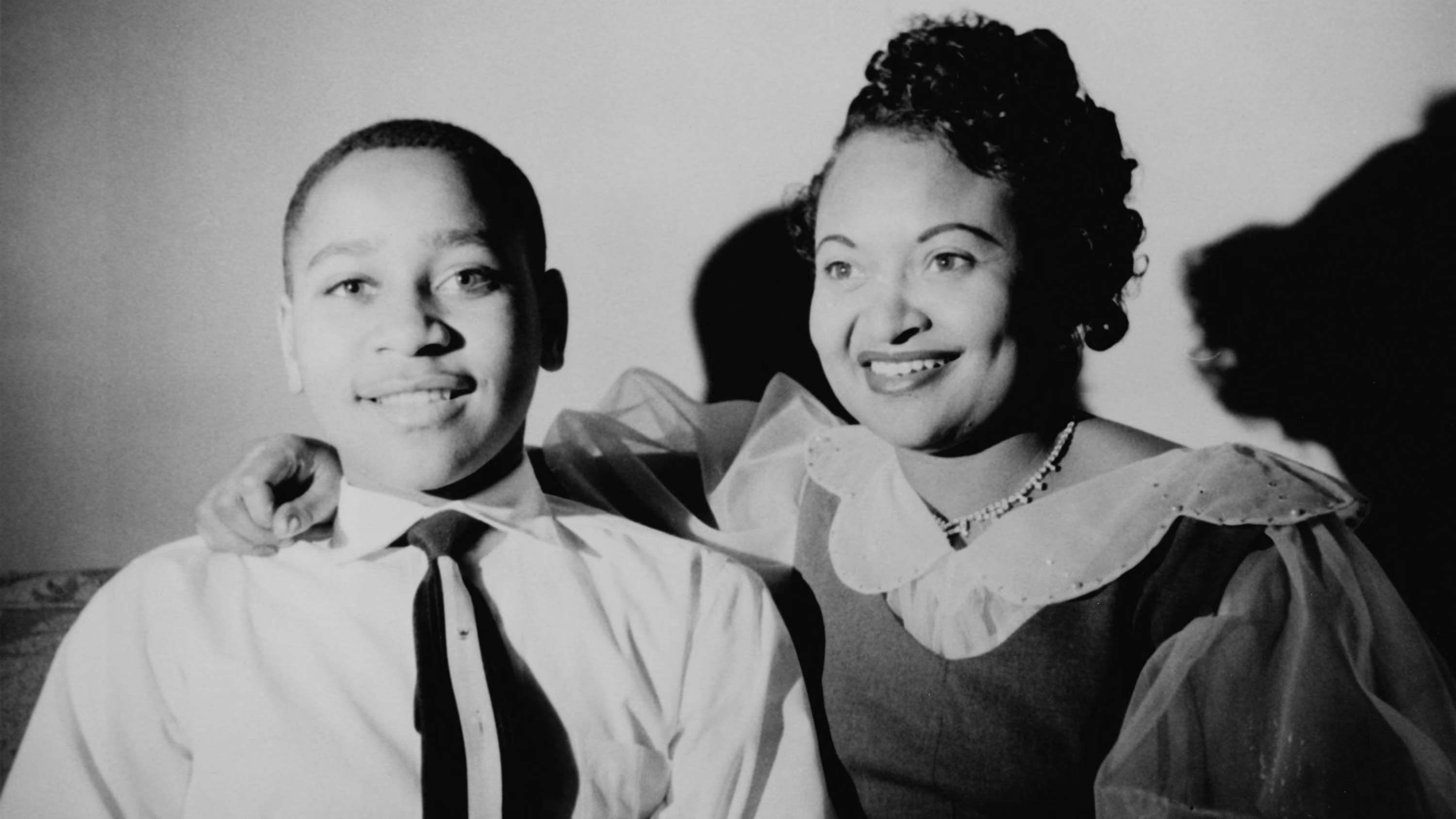
Emmett Till and his mother, Mamie Till-Mobley, ca. 1950. NAACP Records, Prints and Photographs Division, Library of Congress, Washington, D.C.
Emmett Till
Emmett Till is America’s son, born just outside of Chicago, Illinois. He was known by all as Bobo, living with his mother Mamie Till-Mobley and grandmother Alma Spearman in Argo.
In the summer of 1955, while visiting family in Mississippi, 14-year-old Emmett visited a country store, Bryant’s Grocery & Meat Market. He was heard whistling at a white woman, the store clerk, as corroborated by his cousin, the then-16-year-old Wheeler Parker. Days later, Till was abducted from his great-uncle’s home and brutally murdered by the woman’s husband, Roy Bryant, and Bryant’s half-brother, J. W. Milam. Till’s murderers faced an all-white, all-male jury, before which Till was falsely accused of assault against the clerk. The jury acquitted the men, who later confessed to the killing in a Look magazine interview.
Mamie Till-Mobley had the prophetic wisdom to understand that witnessing was central for American democracy. Her motto was “Let the world see.” She made the decision to hold an open-casket funeral "to let the world see what I've seen" when her son’s disfigured body was found at Graball Landing at the Tallahatchie River in Mississippi. More than 100,000 people filed past his casket in Chicago; the publication of his mutilated body in the black press—Jet, Ebony, and the Chicago Defender—stirred black communities nationally. No other outlets would show the images. That act of public witness is widely credited as a flashpoint for the modern Civil Rights Movement—invoked by figures from Rosa Parks to John Lewis to Muhammad Ali to Martin Luther King Jr., and echoed through the March on Washington, held on the eighth anniversary of Till's death.
We can let the world see. Yet is it enough today to let people see? The question today is what will make us all see the facts of history?
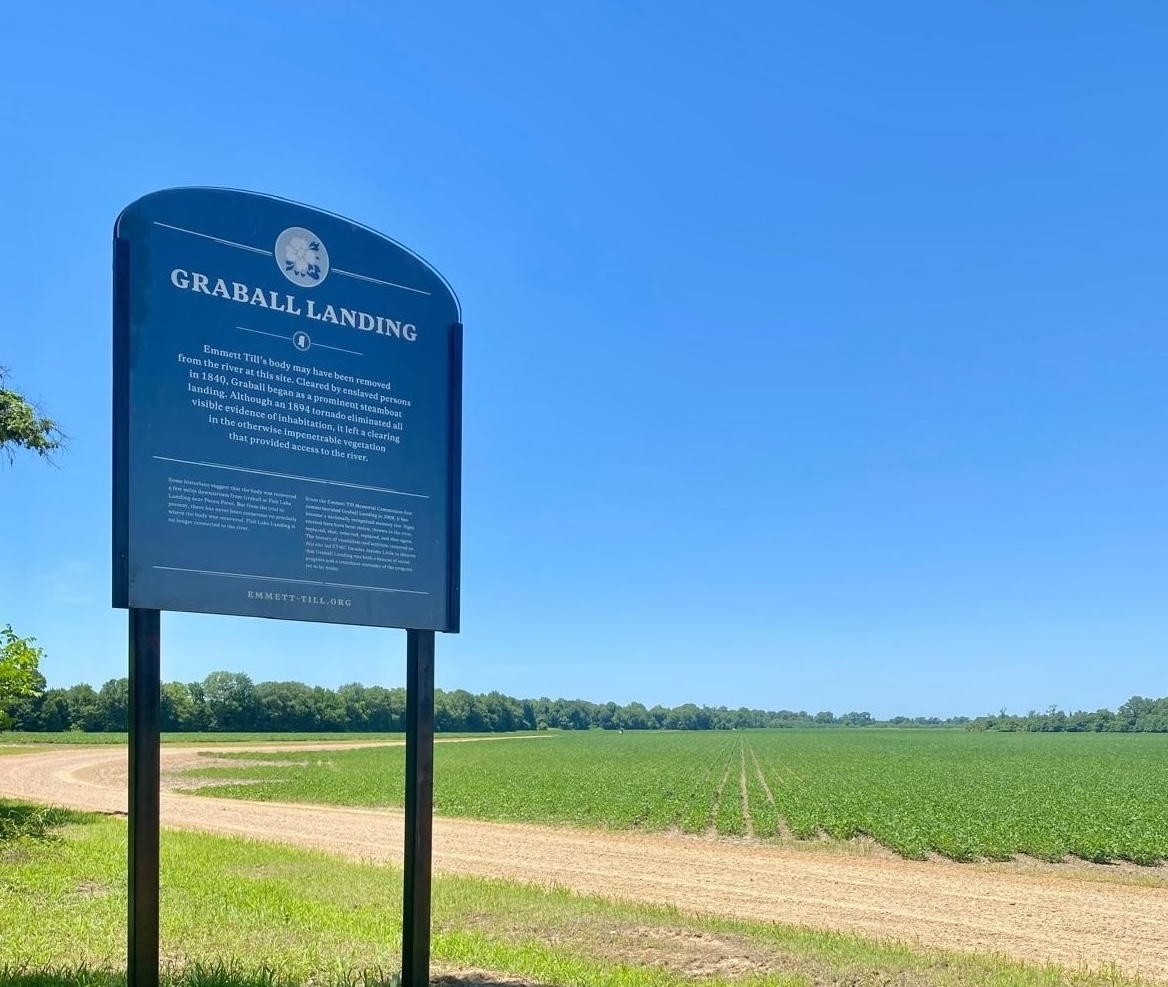
Nearly 70 years after his death, there has been resistance to honoring Till’s life. Since the first marker was erected in 2008, people have repeatedly stolen, defaced, or shot the memorial marker at the site where Till’s body was discovered, Graball Landing. In one instance, the marker was shot 317 times. A third marker was likewise riddled with bullets by University of Mississippi students in 2019. The current, fourth attempt to replace the marker to Emmett Till is bulletproof; it weighs 500 pounds, deliberately heavy, so that it cannot be easily desecrated.
New information emerged in 2017 that the shopkeeper had, years earlier, reportedly recanted the accusations she made against him, and as a result the Till case was reactivated by the U.S. Department of Justice. However, the shopkeeper then denied ever recanting and reasserted her testimony. While the renewed investigation did not lead to any prosecution, it did result in the Justice Department’s statement that “the government does not take the position that the state court testimony the woman gave in 1955 was truthful or accurate.”
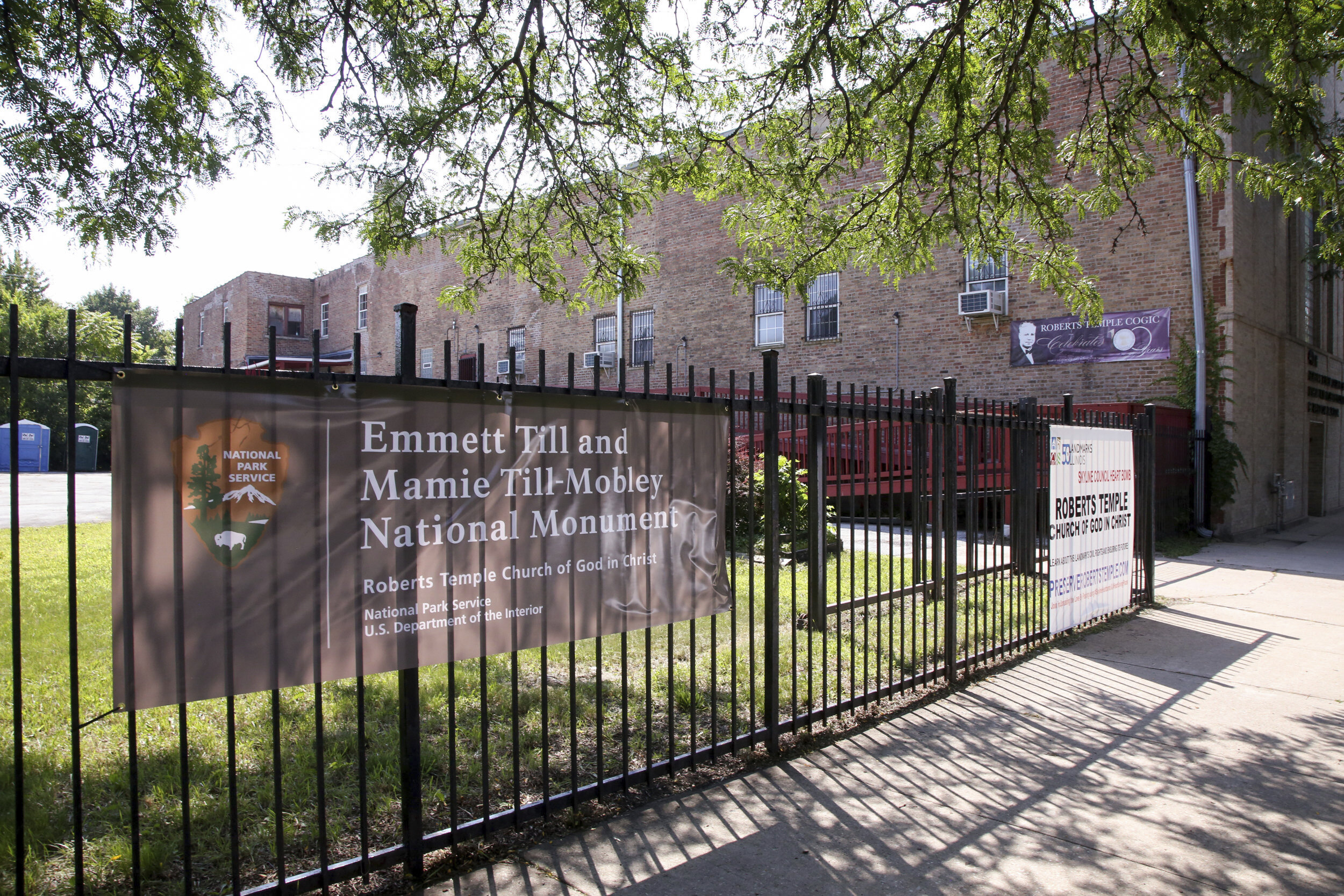
In March 2022, President Biden signed the Emmett Till Antilynching Act, the first federal legislation in United States history to specifically make lynching a federal hate crime. Reverend and Dr. Parker were guests of President Biden at the White House for the signing of the act, coming after the failure of roughly 200 anti-lynching bills since 1900. On July 25, 2023, Till's 82nd birthday, he designated the Emmett Till and Mamie Till-Mobley National Monument, encompassing the Tallahatchie courthouse, Graball Landing, and Roberts Temple Church of God in Christ. Roberts Temple is now under renovation led by Dr. Marvel Parker, supported by the Mellon Foundation and National Trust for Historic Preservation, with Dr. Parker and Reverend Parker continuing advocacy through the Till Institute and the Reverend Wheeler Parker Jr. Foundation.
Robert’s Temple Church of God in Christ
“It was like our mecca. People came from all over to this place to just worship.” – Reverend Wheeler Parker Jr.
Emmett's funeral marked a turning point in American history. Mamie Till-Mobley, insisted on holding an open-casket wake to "let the world see what I've seen." She demanded her child's mutilated, lynched body be returned to Chicago and refused to let the violence done remain hidden or private, transforming private grief into public testimony. The one-day visitation at A.A. Rayner & Sons Funeral Home drew over 5,000 mourners. The service then moved to Roberts Temple Church of God in Christ, which filled its 1,700-person capacity, while nearly 10,000 more gathered outside to listen over loudspeakers. Mamie delayed the burial so more mourners could view her son's body; ultimately, more than 100,000 people filed past his casket over three days. That act of witness launched the Civil Rights Movement as we know it. Roberts Temple was later declared a Chicago Landmark in 2006, and became part of the Emmett Till and Mamie Till-Mobley National Monument in 2023, preserving the site as a living testament.
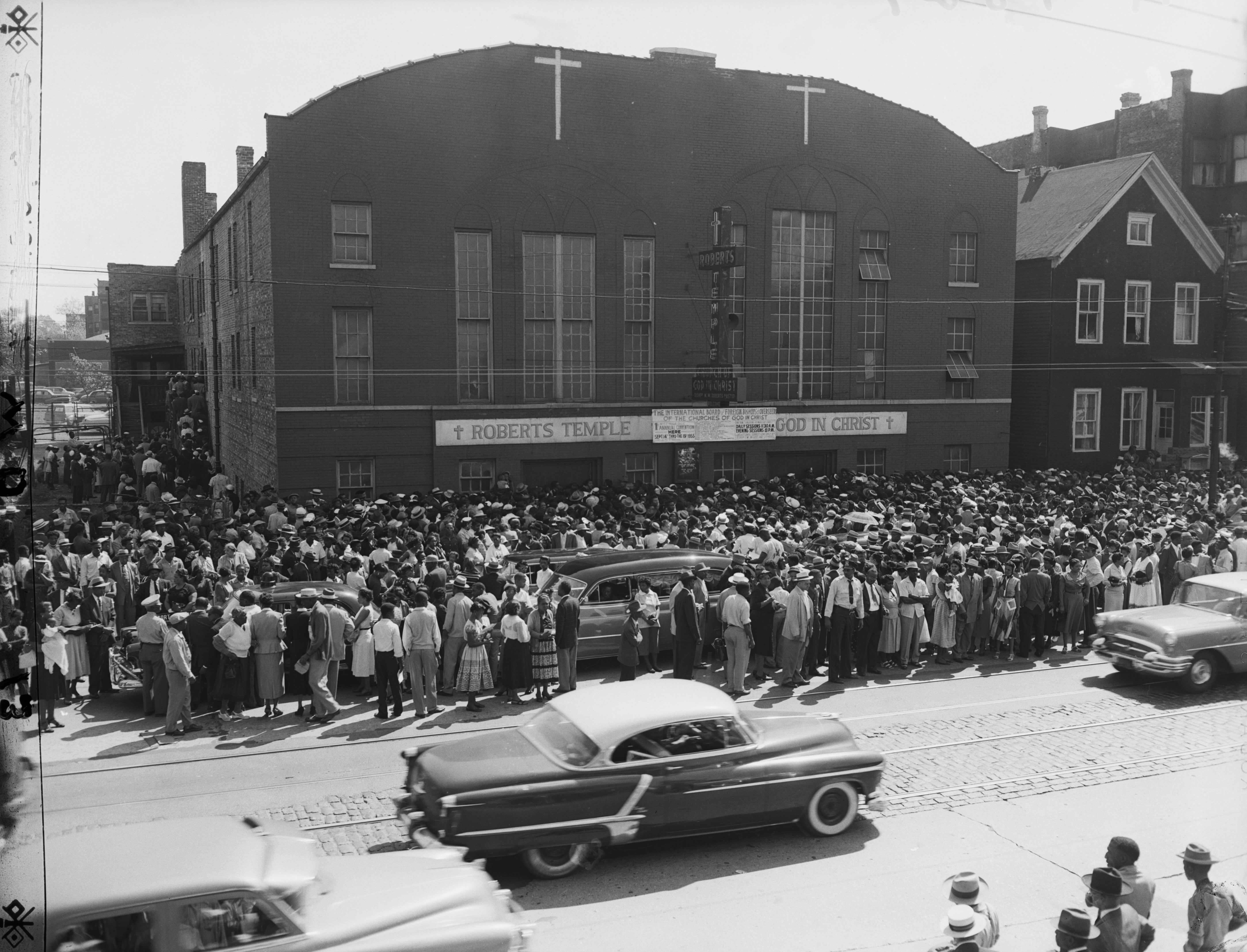
Crowd outside of Roberts Temple Church of God, located at 4021 South State Street, during the funeral of Emmett Till, Chicago, Illinois, September 3, 1955.
© Chicago Sun-Times Media, Inc. All rights reserved. DN-R-4827, Chicago Sun-Times/Chicago Daily News collection, Chicago History Museum
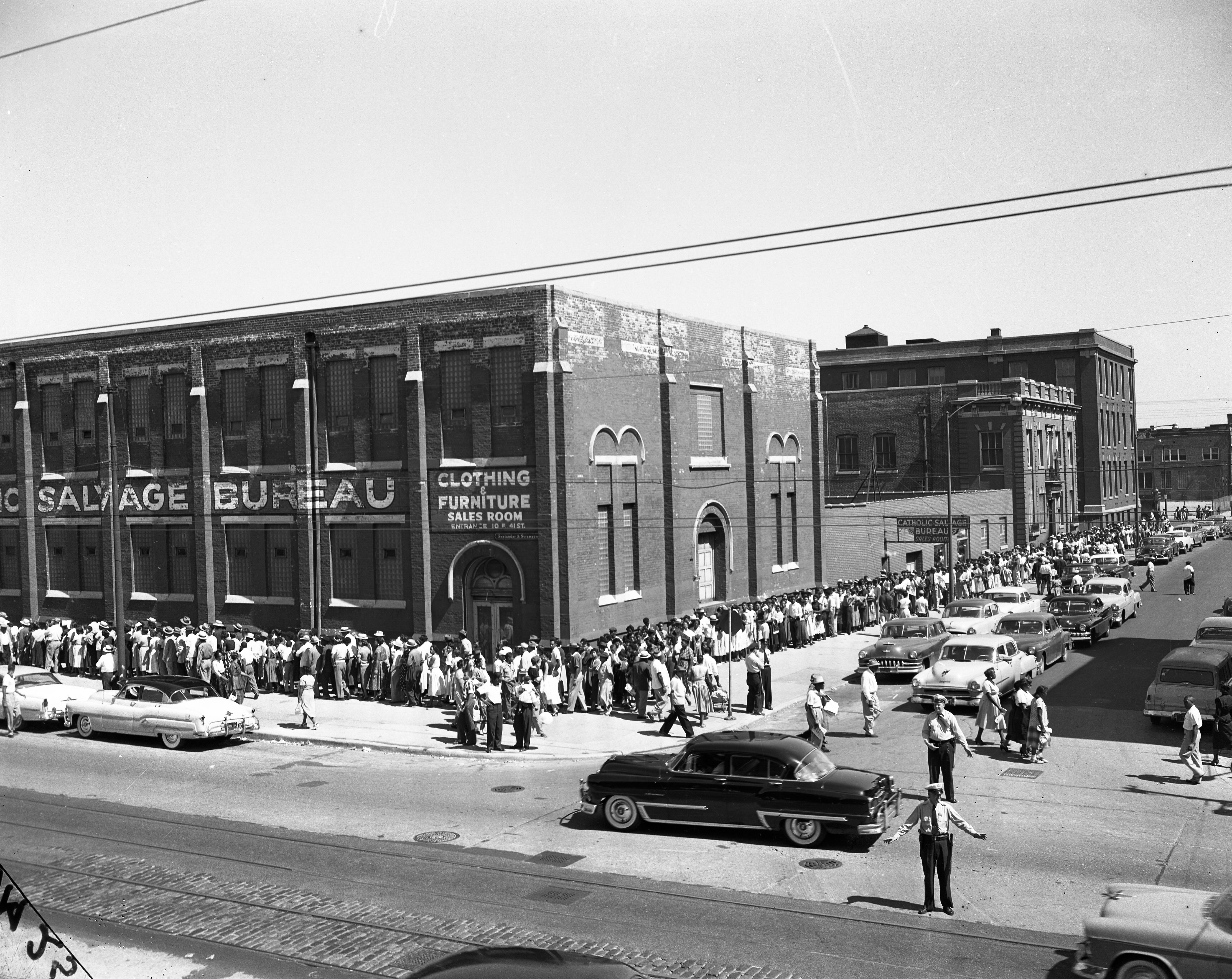
Long line of mourners at State Street and 41st Street waiting to enter Roberts Temple Church of God in Christ for the viewing of Emmett Till, Chicago, Illinois. Till, a 14-year-old Black child, was brutally murdered and lynched by two white men, Roy Bryant and J.W. Milam, in a racist attack.
© Chicago Sun-Times Media, Inc. All rights reserved. ST-17600654, Chicago Sun-Times Collection, Chicago History Museum
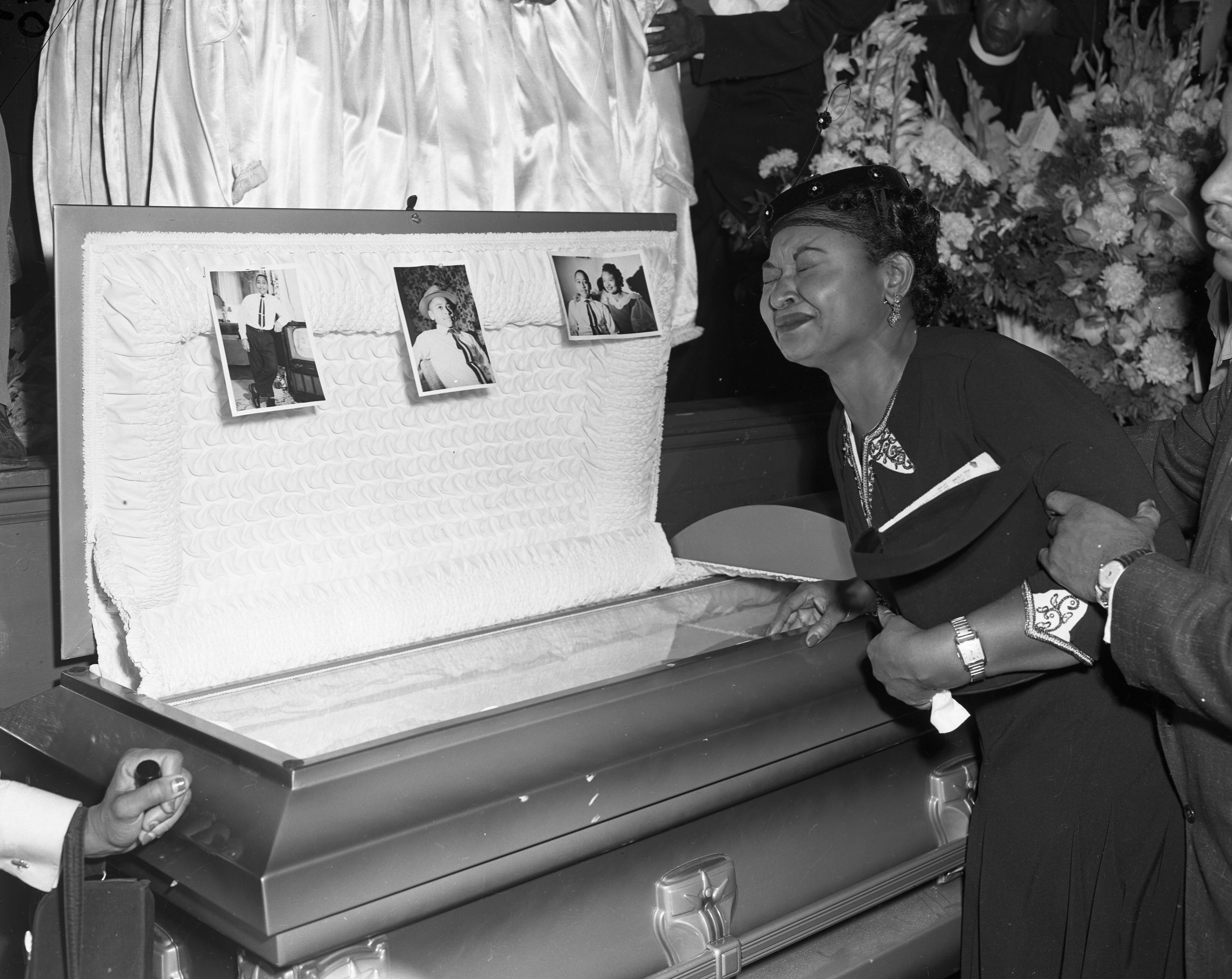
Mamie Bradley grieving over the casket of her son, Emmett Till, during his funeral at Roberts Temple Church of God in Christ, 4021 South State Street, Chicago, Illinois. Till, a 14-year-old Black child, was brutally murdered and lynched by two white men, Roy Bryant and J.W. Milam, in a racist attack.
© Chicago Sun-Times Media, Inc. All rights reserved. ST-17600658, Chicago Sun-Times Collection, Chicago History Museum
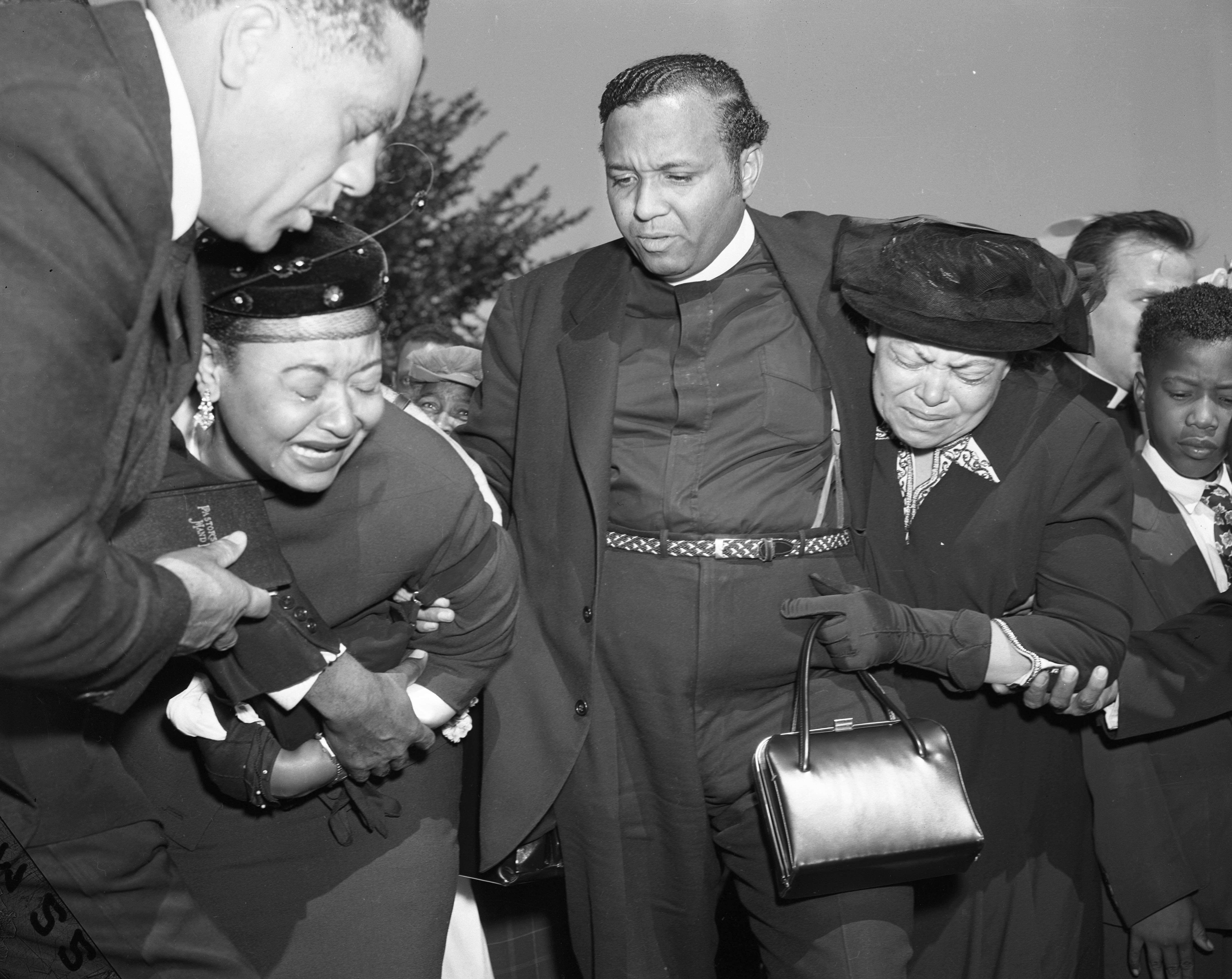
Standing next to pastors of Roberts Temple Church of God in Christ, Mamie Bradley, mother of Emmett Till, weeps during her son's burial service at Burr Oak Cemetery, Alsip, Illinois. Till, a 14-year-old Black child, was brutally murdered and lynched by two white men, Roy Bryant and J.W. Milam, in a racist attack.
© Chicago Sun-Times Media, Inc. All rights reserved. ST-17600659, Chicago Sun-Times Collection, Chicago History Museum
Memorials
It is impossible to understand the significance of the attempts to honor Emmett Till's memory without knowing the resistance that has long accompanied it. Erasure and the effort to memorialize are twinned, and the markers themselves, along with the attempts to destroy them, have become part of the evidence.
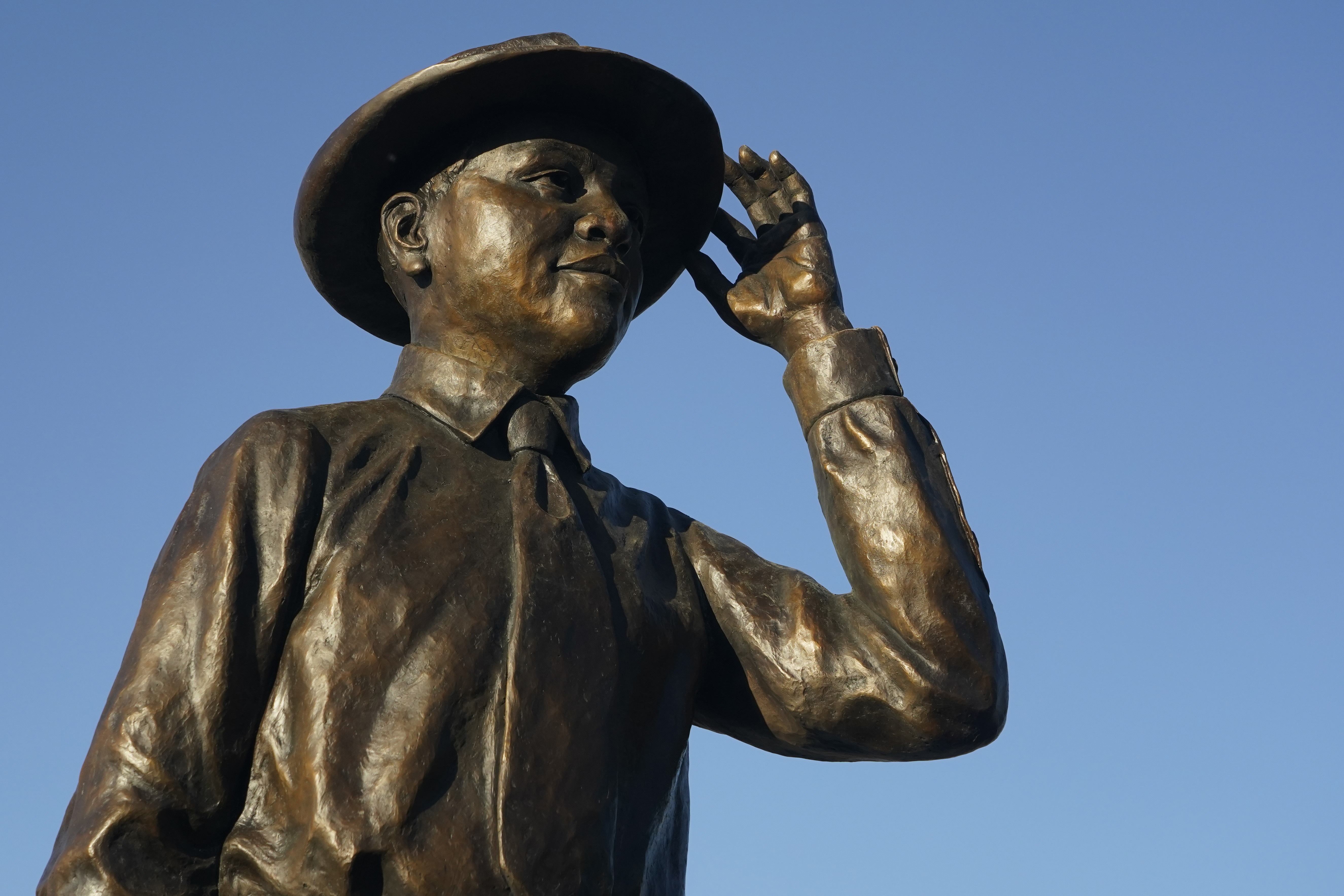
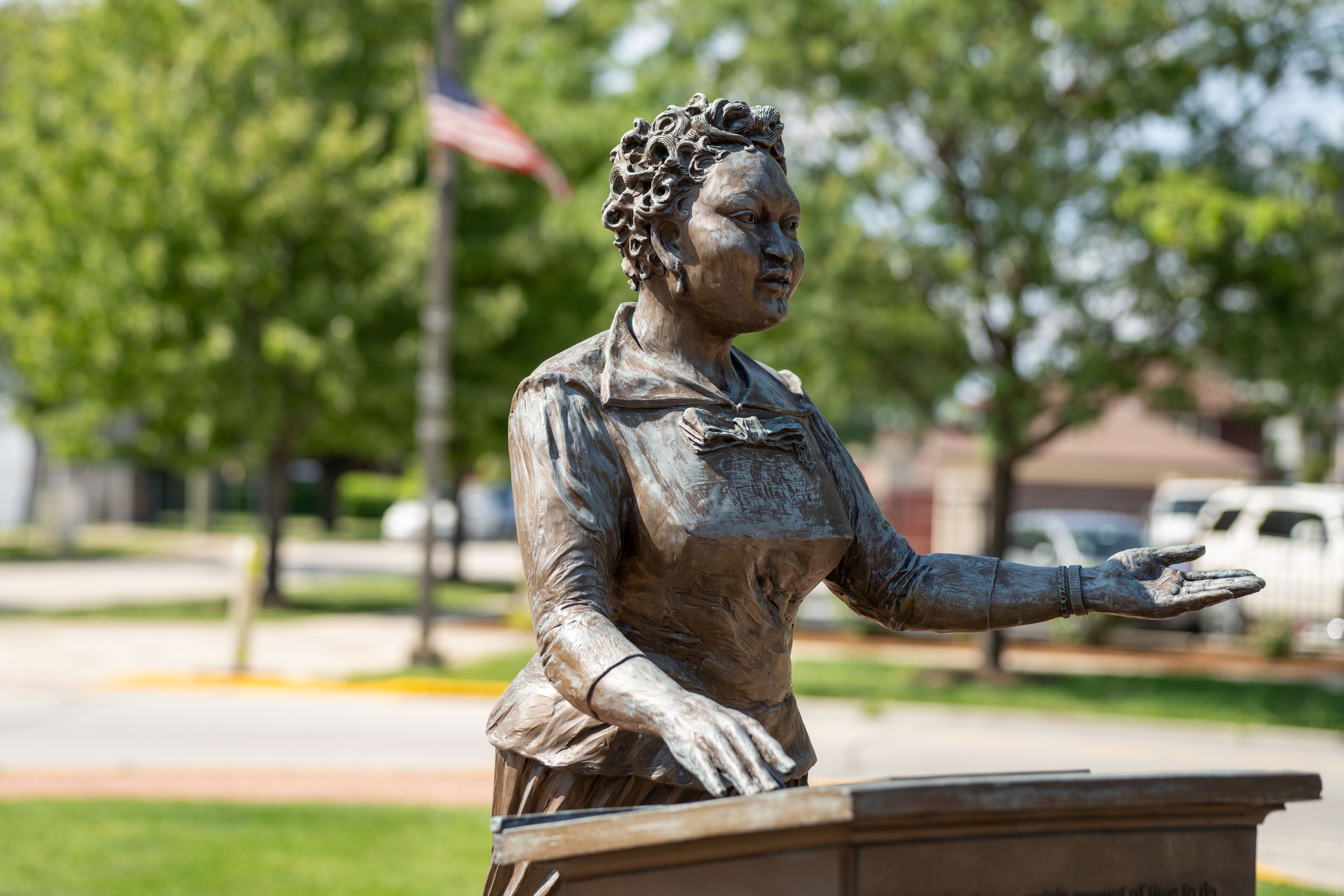
Mamie Till-Mobley and Emmett Till Memorial (Argo Community High School, Summit, IL)
A life-size bronze sculpture by Sonja Henderson showing Mamie standing next to a lectern whose three sides depict Emmett's boyhood, murder site, and funeral, unveiled in 2023 at Till-Mobley's alma mater. Photo by Lance Omar Thurman, 2026.
.jpg)
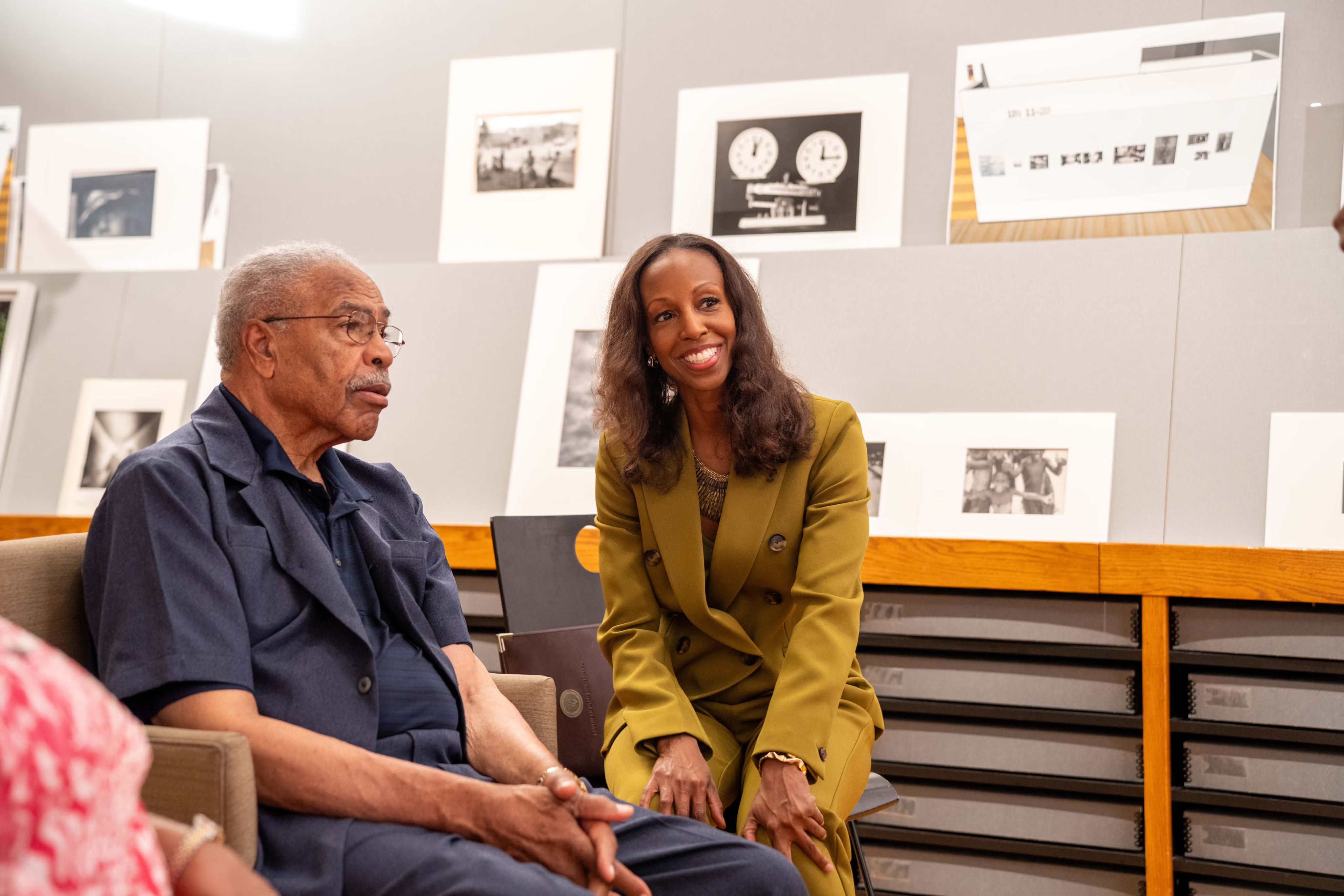
Reverend Wheeler Parker Jr. and Sarah Elizabeth Lewis discuss image selections for the exhibtion, If Emmett Till Lived: Freedom on American Ground.
.png)
About Reverend Wheeler Parker Jr.
Rev. Wheeler Parker Jr. is Administrative Assistant, 5th Illinois Jurisdiction-West, Superintendent of Good Tidings District, and Pastor of Argo Temple Church of God in Christ, where he has been a member since 1947. Rev. Wheeler Parker Jr. is a survivor of the Emmett Till kidnapping and murder in Mississippi in 1955. At age 16, he and his cousin Emmett Till, age 14, traveled to Mississippi for a two-week vacation at his grandfather’s home in Money, Mississippi, to visit with his young uncles. Their trip was abruptly interrupted by the kidnapping and murder of Emmett Till, who was taken at gunpoint from the home of Moses Wright. Emmett’s body was found three days later floating in the Tallahatchie River with a seventy-five-pound cotton gin tied around his neck with barbed wire. Rev. Wheeler Parker graduated from Argo High School in 1958 and Molar Barber College in 1959. A graduate of the School of Modern Photography, he moonlighted as a photographer, attended Moraine Valley Community College, H. C. Mason Theological Bible School, Global University, and the Chicago Academy of Fine Arts. He served his country for two years in the U.S. Army as a Medical Specialist. In February 2022, Rev. Wheeler Parker Jr. was guest of President Joe Biden at the White House for the signing of the Emmett Till Antilynching Bill. On July 25, 2023, he was honored to introduce President Joe Biden at the ceremony for the signing of the proclamation creating the Emmett Till and Mamie Till-Mobley National Monument. He was awarded a Doctorate Degree in Humane Writings from Delta State University in 2025. Married for 59 years to Dr. Marvel McCain Parker.

About Sarah Elizabeth Lewis
Sarah Elizabeth Lewis is founder of Vision & Justice, a publishing and research initiative for artists, scholars, and leaders seeking to examine the foundational role of visual culture in America’s representational democracy. She currently serves as the John L. Loeb Associate Professor of the Humanities and Associate Professor of African and African American Studies at Harvard University. Through Vision & Justice, she has organized landmark public programs and convenings and founded the Vision & Justice Book Series, launched in partnership with Aperture. She is the author or editor of more than sixty publications, including The Unseen Truth, winner of the American Book Award; the best-selling The Rise; Carrie Mae Weems; and a special “Vision & Justice” issue of Aperture. Lewis was named as one of TIME magazine’s 2026 “Closers” in recognition of her work toward achieving greater equality in the United States and has received honorary degrees from the Massachusetts College of Art and Design (2026), the Institute for Doctoral Studies in Visual Arts (2026), and Pratt Institute (2024). Before joining the faculty of Harvard, she held curatorial positions at The Museum of Modern Art, New York and Tate Modern, London, and served as a critic at Yale University School of Art.
Resources
If Emmett Till Lived salutes the institutions honoring Till’s legacy around the country by sharing the resources below.
Vision & Justice
Sarah Lewis's initiative on visual culture and justice
Museum of Contemporary Photography
Columbia College Chicago's photography museum (MoCP)
Equal Justice Initiative (EJI)
Legal advocacy and Legacy Sites on the history of racial injustice, led by Bryan Stevenson
Facing History: Murder of Emmett Till
Six-lesson unit on Till's murder and its legacy today
Emmett Till Memory Project
App and site guiding visitors to sites tied to Till's story
Emmett Till Interpretive Center
Sumner, MS museum/trail marking Till lynching sites
The Emmett Till and Mamie Till-Mobley Institute
Led by Dr. Marvel Parker, preserves Till's Chicago legacy
A Few Days Full of Trouble
Reverend Wheeler Parker Jr.’s autobiography on the journey to justice for Till
Rep. Ayanna Pressley
U.S. Representative, MA-07; official House website
National Trust for Historic Preservation
Leading nonprofit helping communities maintain and enhance the power of historic places
Smithsonian Institution
Featuring an exhibit on Emmett Till's memory and ongoing racial violence
14th Amendment Center for Law and Democracy
Howard center on the 14th Amendment and democracy, led by Sherrilyn Ifill