The Exhibition
Freedom on American Ground
Sep 10 - Dec 19, 2026
On view at the Museum of Contemporary Photography at Columbia College Chicago
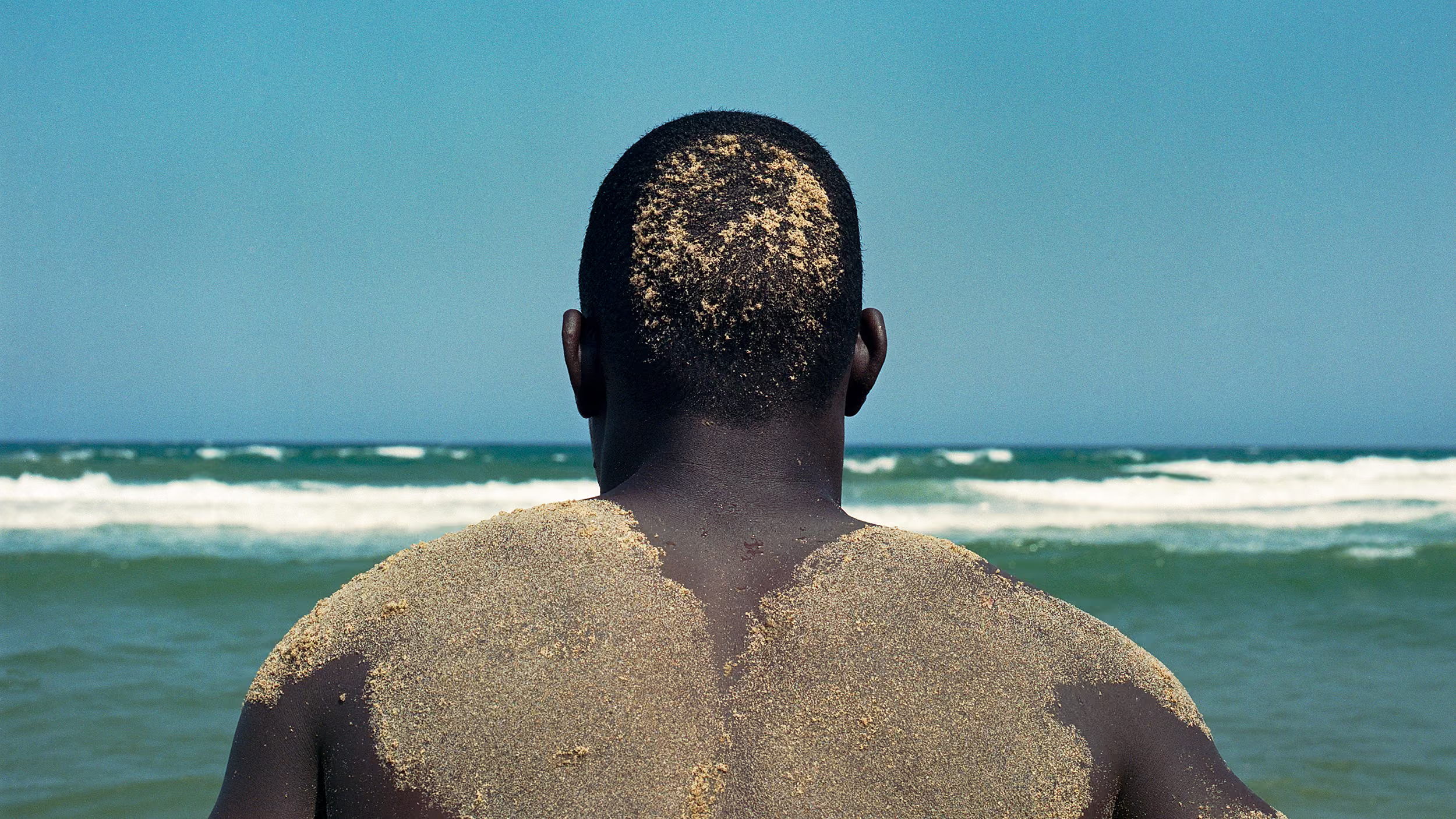
Daniel Castro Garcia, Catania, Sicily, Italy, 2017
About the Exhibition
What if Emmett Till lived? What if he had returned home still a child, alive and free?
If Emmett Till Lived: Freedom on American Ground is organized by curator, art and cultural historian, and scholar Sarah Elizabeth Lewis, in collaboration with Reverend Wheeler Parker Jr.—Emmett Till's cousin, best friend, and the last surviving witness to his kidnapping.
In the wake of what would have been Till’s 85th birthday, Lewis and Parker join individuals and institutions around the country to ask: What might Emmett Till’s life have been had he safely boarded the train back home to Chicago? What would that life have required of us all? What has come of the unjust, violent denial of his right to life?
If Emmett Till Lived is a space to invite viewers to reimagine possibility. Unfurled in the exhibition is the full life Till could have experienced beyond age 14, and what that life could have meant for our own, through the work of more than 110 historic and contemporary photographers.
Mamie Till-Mobley had the prophetic wisdom to understand that witnessing was central for American democracy. Her motto was, “Let the world see.” We can let the world see. Yet is it enough today to let people see? The question today is what will make us all see the facts of history?
At a moment when history is being fiercely contested—and there remains violent opposition to the very idea of honoring Till’s memory—this project serves as a creative monument to his unlived life and continuing legacy. Through pictures drawn from the Museum of Contemporary Photography at Columbia College Chicago’s permanent collection, viewers are invited to imagine and meditate on the roughly 70 years Till was denied.
There is not one photograph of Emmett Till in the exhibition. There is not one image of the violence he endured or the people who caused it. Instead, the images evoke the experiences, relationships, and milestones that might have shaped his unrealized childhood and adulthood, and gesture to what threatened the right to his own existence. Till, his mother, and his community are represented through a universe of proxies—other children, mothers, friends, kin—to map and offer into alternative timelines that should have been possible.
Throughout the show are reflections by Reverend Wheeler Parker Jr. as he viewed the art with Sarah Elizabeth Lewis. Alongside are reflections from civic and cultural leaders who geographically represent Till’s untaken journey home from Mississippi to Chicago and who selected images to represent their hopes for Till’s unlived life. They include Lonnie G. Bunch III, Chelsea Clinton, Ava DuVernay, Alicia Garza, Sherrilyn Ifill, John Legend, Brent Leggs, Franklin Leonard, Wynton Marsalis, Dr. Marvel Parker, Rep. Ayanna Pressley, RaMell Ross, Amy Sherald, Bryan Stevenson, Hank Willis Thomas, Hamza Walker, Deborah Willis, and more. They offer us a way of honoring Till’s life, not only his death, and guide us to the possibilities of the lives we might make together.
There were many Tills. There are many Tills. Till’s name and memory continue to shape struggles for racial justice and to demand that America confront the violence of its past. Indeed, through the work of leaders past and present—from Ida B. Wells to Medgar Evers to Sherrilyn Ifill and Bryan Stevenson—we have come to reckon with the history of racial terror as a tactic used to enforce racial hierarchies.
In early September, in Chicago, the Roberts Temple Church of God in Christ, the site of Emmett Till’s funeral, will unveil a re-creation of its historic sign and illuminate it for the first time, heralding the opening of our collective remembrance. If Emmett Till Lived joins this and other institutions—from the organizations that steward Till’s legacy as well as the Equal Justice Initiative, the 14th Amendment Center for Law and Democracy, and the Smithsonian’s National Museum of African American Art and Culture—to demonstrate that the search for America is inseparable from the search for Till himself.
Till’s life hovers over this collective arena and in that suspension, places viewers over American ground to see what it wrought, and the work that remains.
The Curatorial Process
Lewis spent a year selecting images from the MoCP collection to represent her hopes for Till’s unlived life. She then traveled to Argo-Summit to meet Dr. Marvel Parker and Rev. Wheeler Parker Jr. to present the concept of the show to them and to ask if Rev. Parker would co-curate the initiative with her. During the summer of 2026, Professor Lewis and Rev. Parker shaped the final image selections together, drawing on Parker’s childhood memories of Emmett Till, his societal reflections, and his hopes for the life Till should have been able to live.
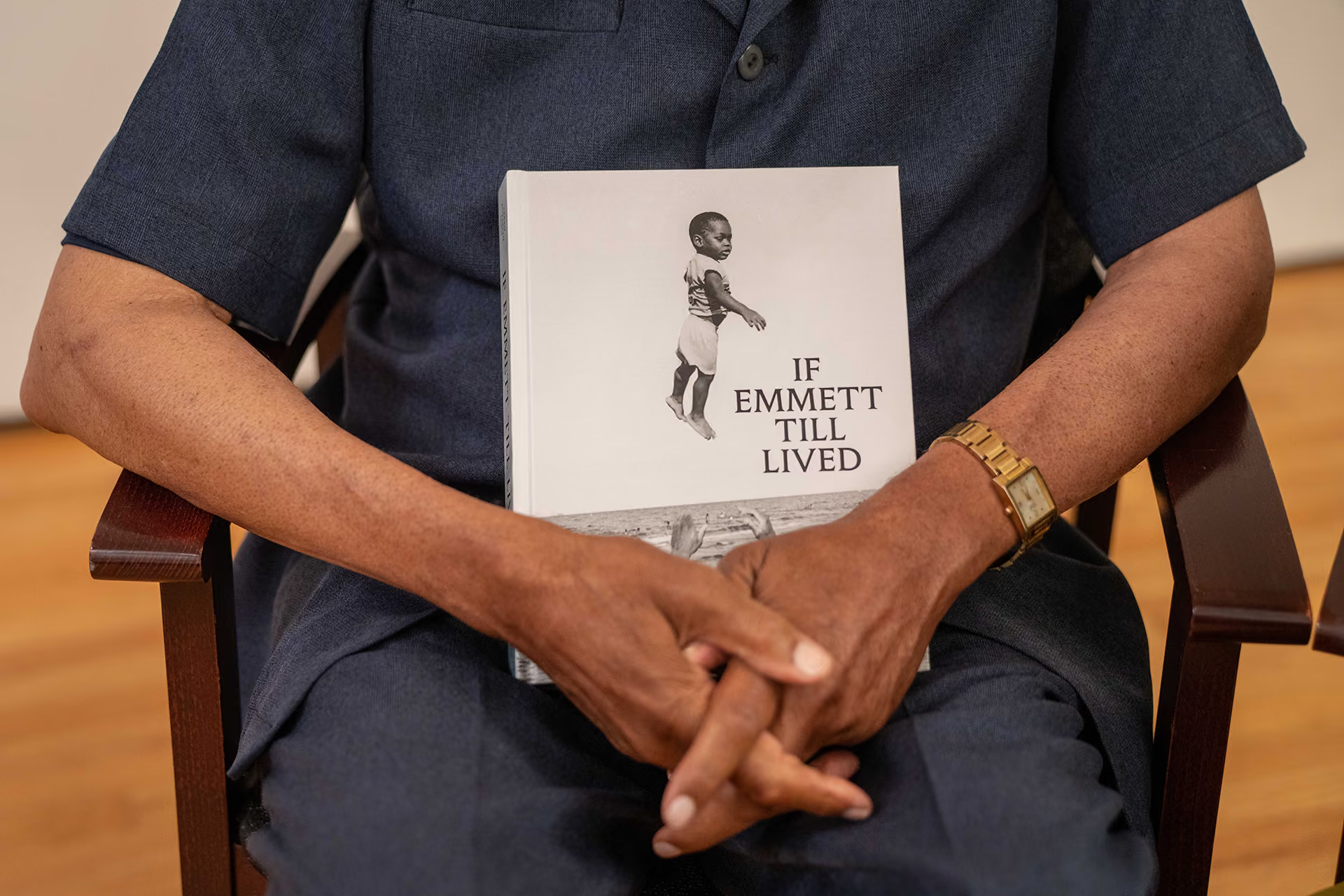
Rev. Wheeler Parker holds a finished copy of If Emmett Till Lived for the first time. July 1, 2026. Photo by Lance Omar Thurman.
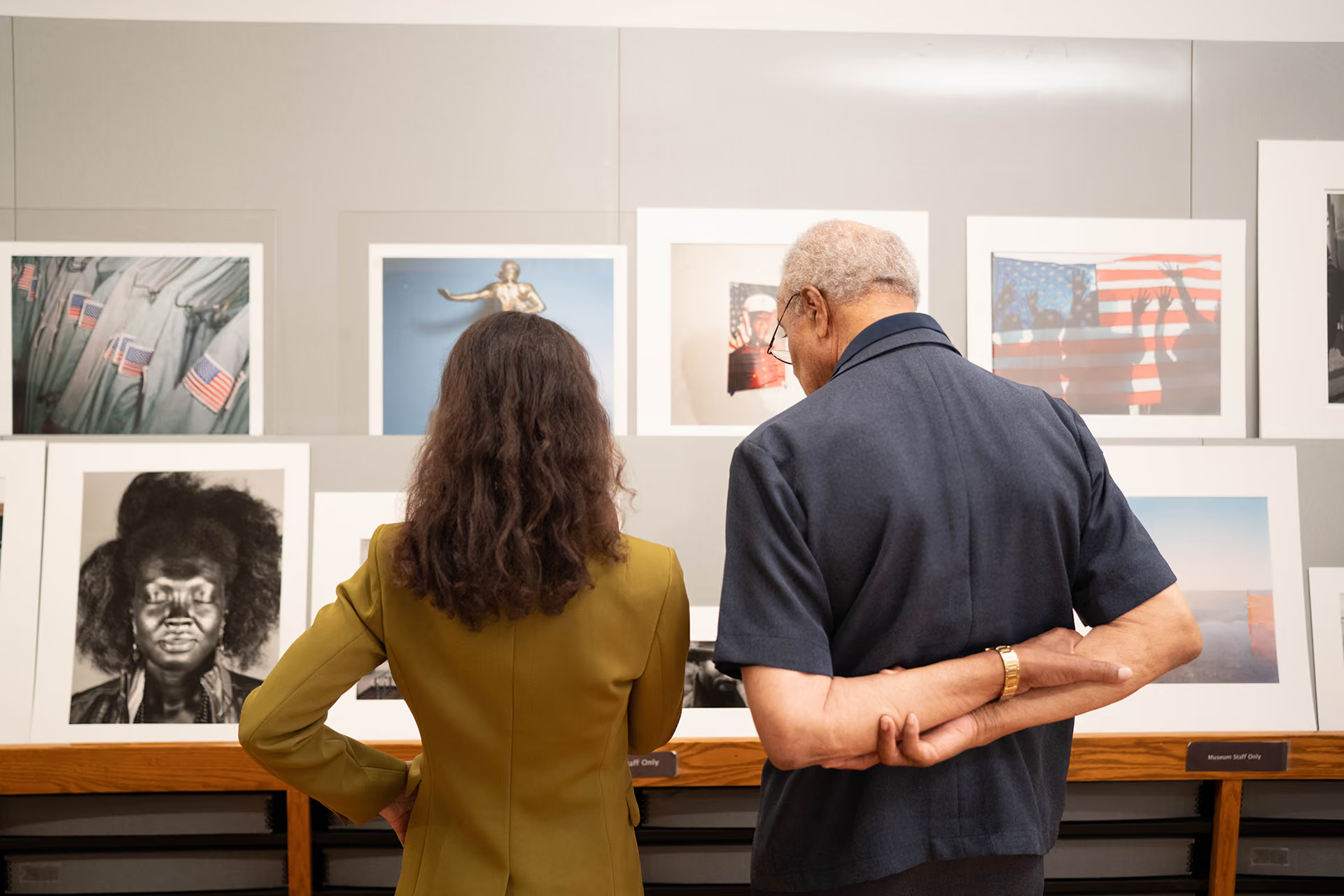
Rev. Parker and Sarah Lewis weigh which works to include in the show. They all made it in. July 1, 2026. Photo by Lance Omar Thurman.
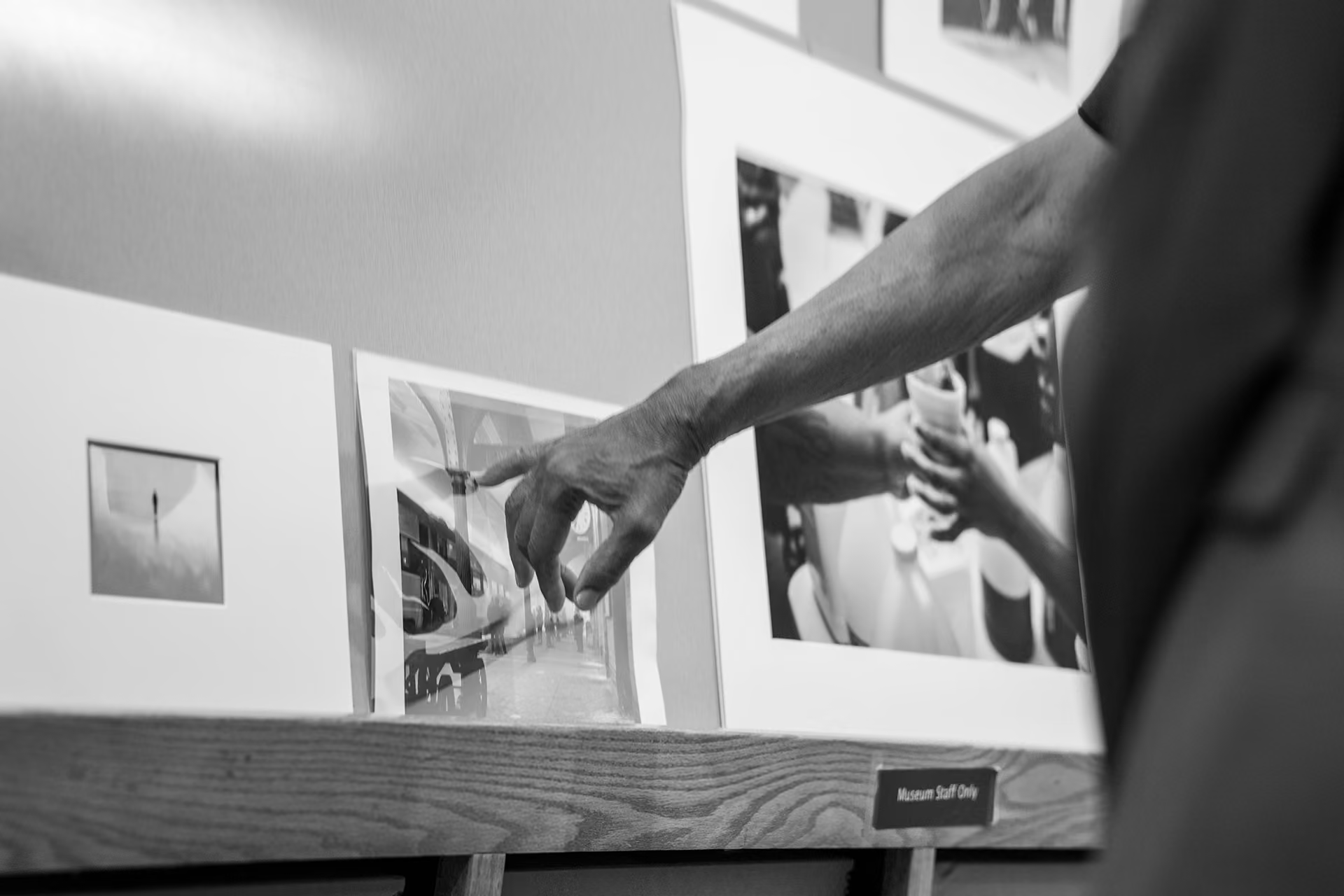
Rev. Wheeler Parker gestures towards David Plowden’s Former Delaware, Lackawanna and Western Railroad Station, Scranton, Pennsylvania, 1964. Beside it (right) Kenn Cook Jr’s Snow Cones, Chicago’s Westside, 2024 and (left) Ruth Thorne-Thomson’s Levitating Man, Wisconsin, from the door series 1983. July 1, 2026. Photo by Lance Omar Thurman.
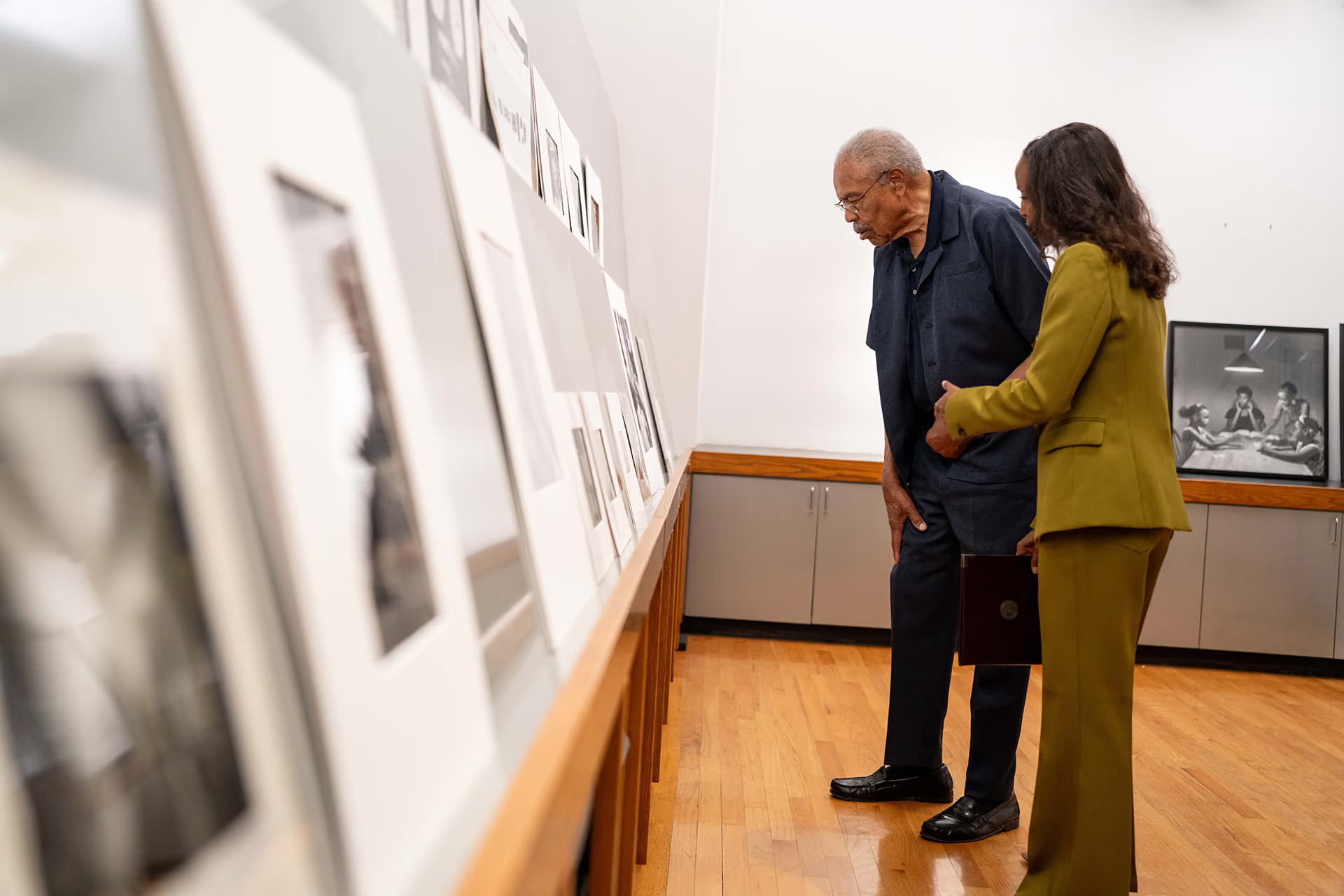
Rev. Wheeler Parker and Sarah Lewis review a selection of works together during MoCP's second curatorial session. July 1, 2026. Photo by Lance Omar Thurman.
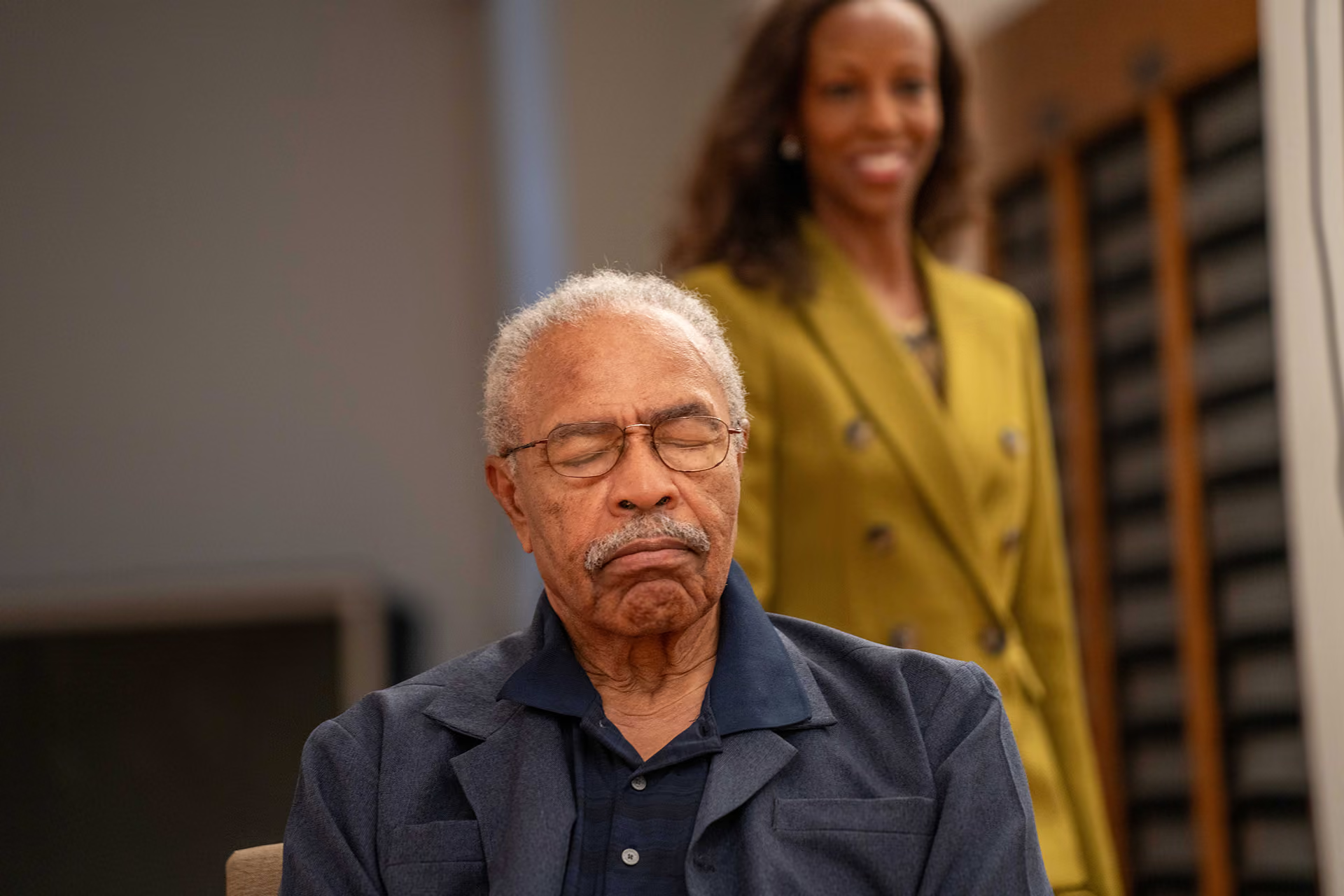
Rev. Wheeler Parker meditates during the second curatorial session as Sarah Lewis walks behind him. July 1, 2026. Photo by Lance Omar Thurman.
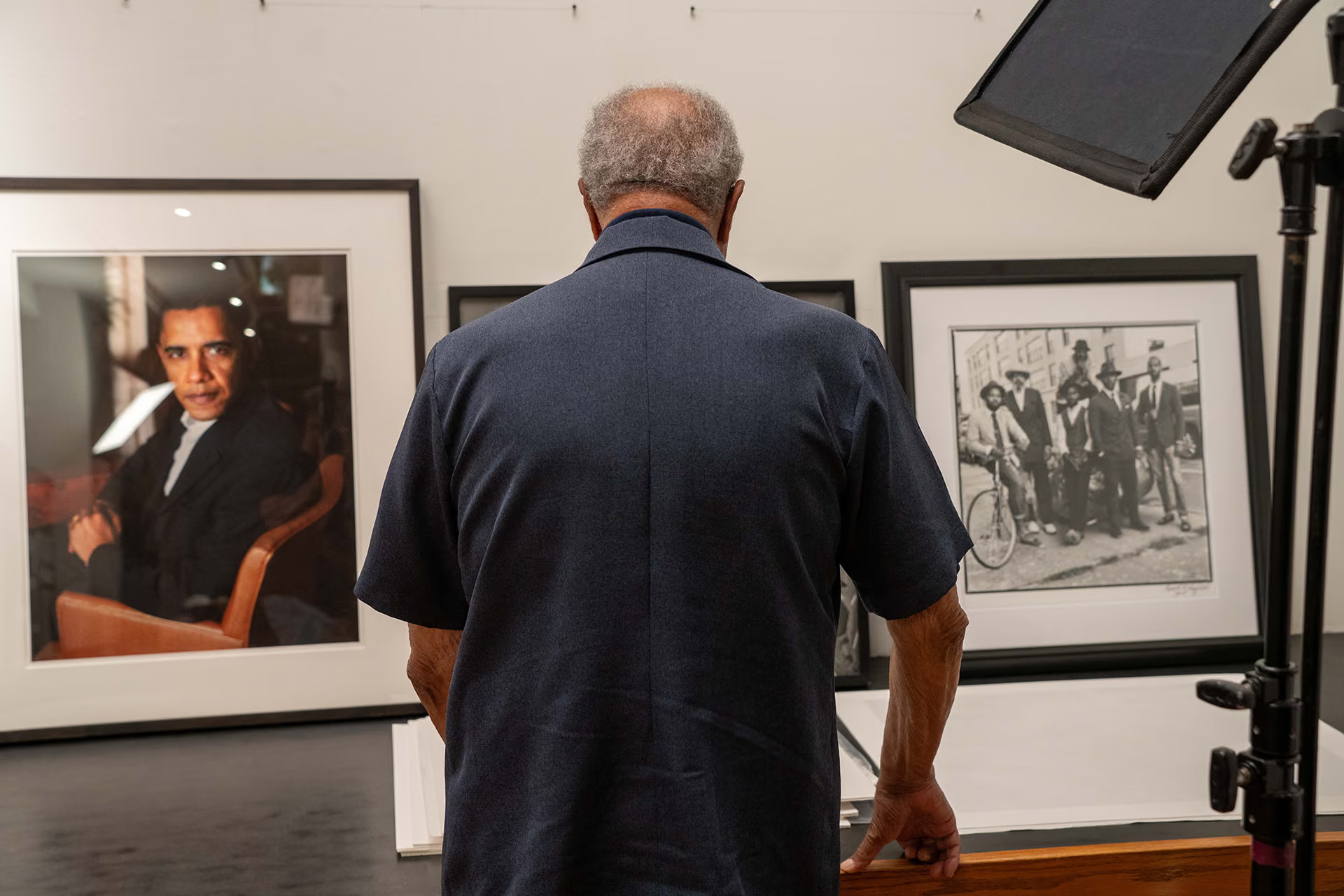
Rev. Wheeler Parker stands in front of Dawoud Bey, Barack Obama, 2006. July 1, 2026. Photo by Lance Omar Thurman.
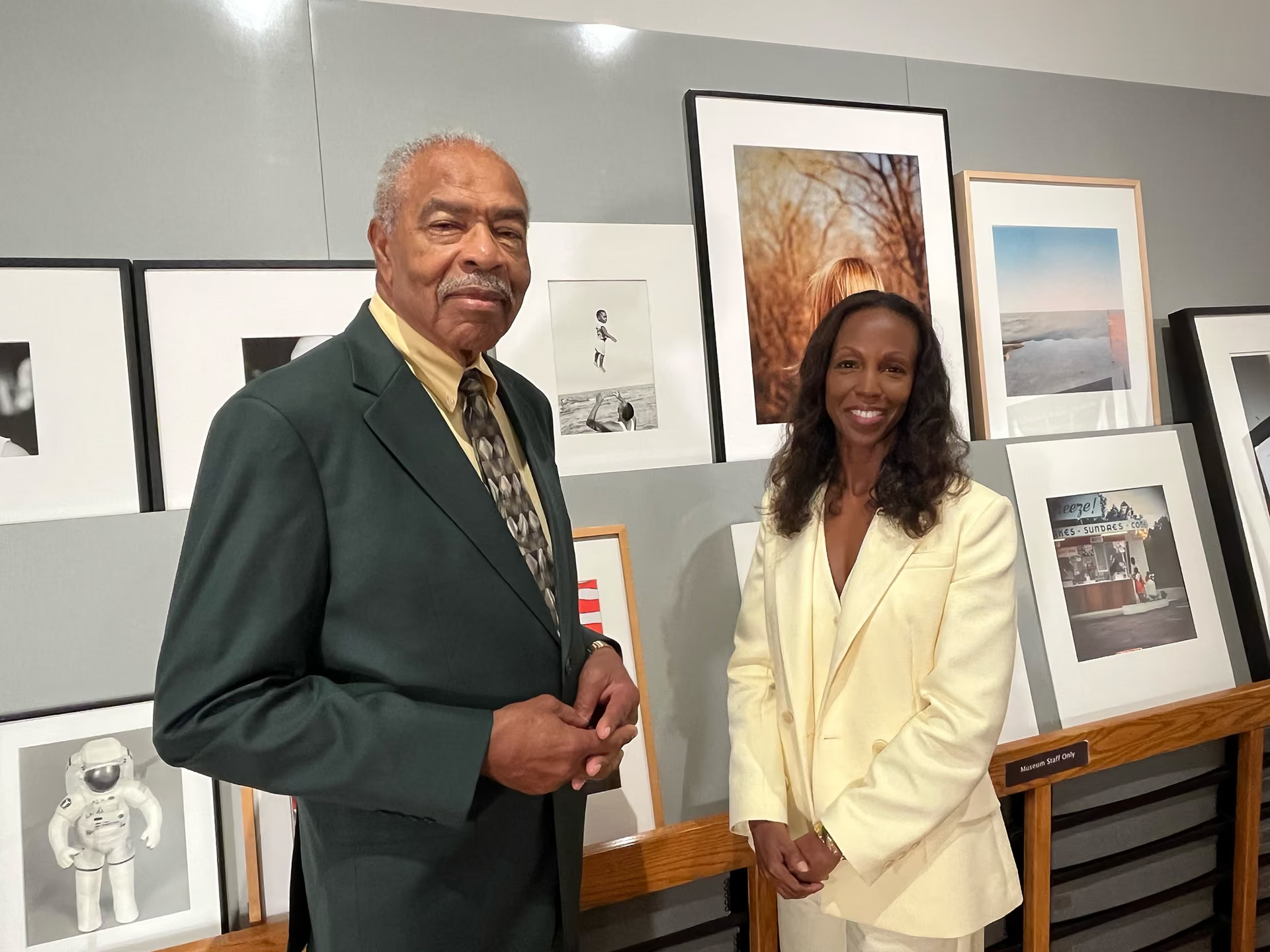
Rev. Wheeler Parker Jr. and Sarah Lewis preparing for their interview on Christiane Amanpour CNN. July 29, 2026. Photo by Karen Irvine.
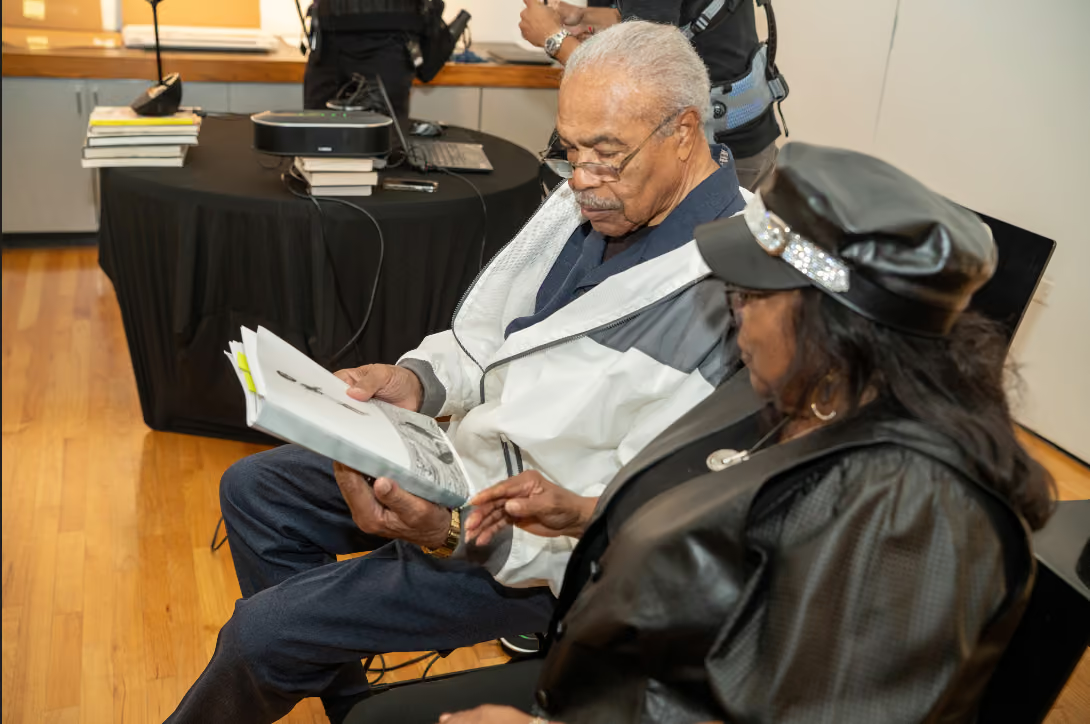
Rev. Wheeler Parker Jr. holds a copy of the If Emmett Till Lived book alongside his wife, Dr. Marvel Parker during the first curatorial session. June 12, 2026. Photo by Lance Omar Thurman.
Reverend Parker's reflections
Over 18 hours of recordings with Reverend Parker during summer 2026 led to the quotes paired with images here and throughout the exhibition.
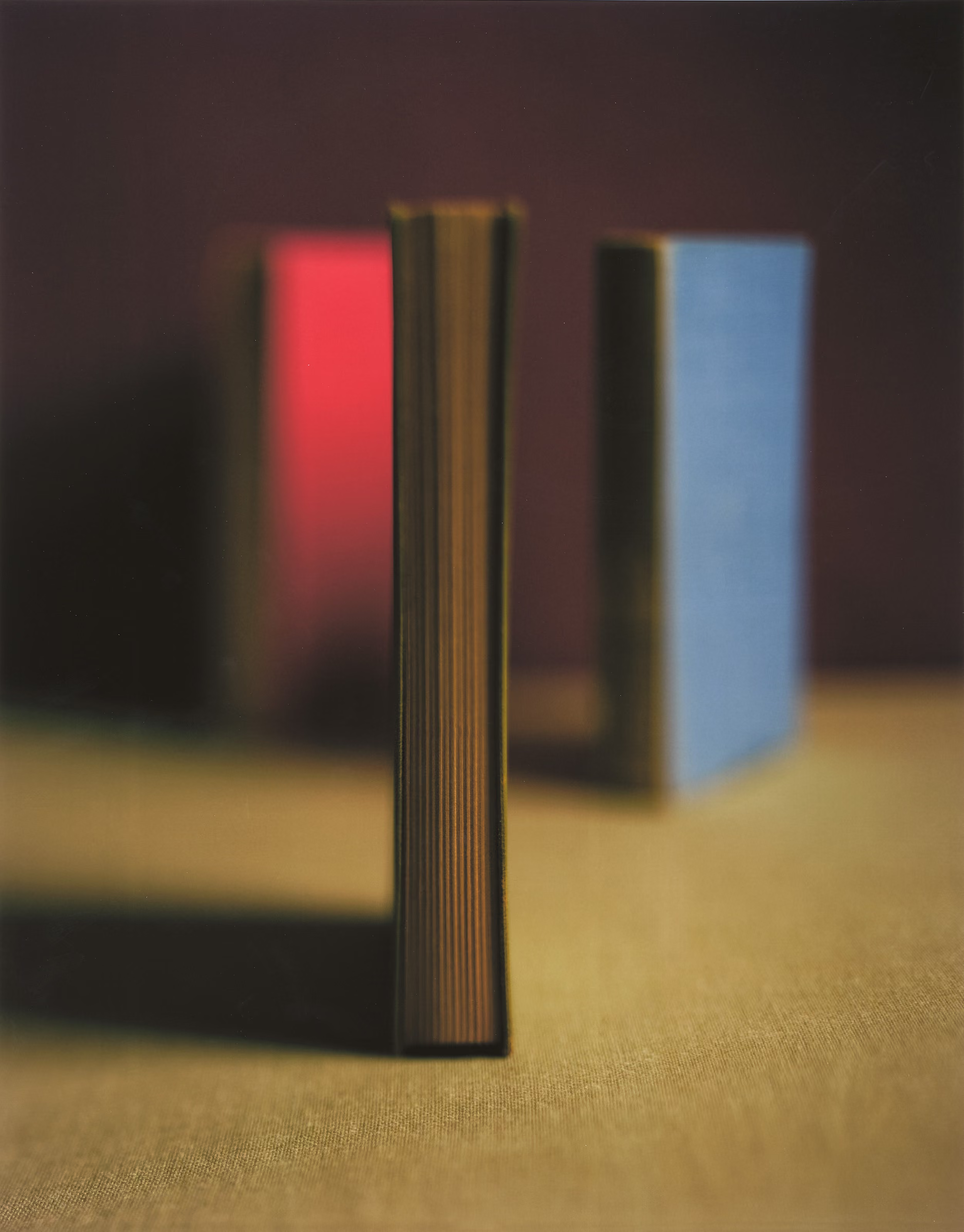
Victor Schrager, #123, from the Book Series, 2004
"She was well read and studied elocution. We can learn a lot from how she prepared and then have opportunity. Mamie was prepared."
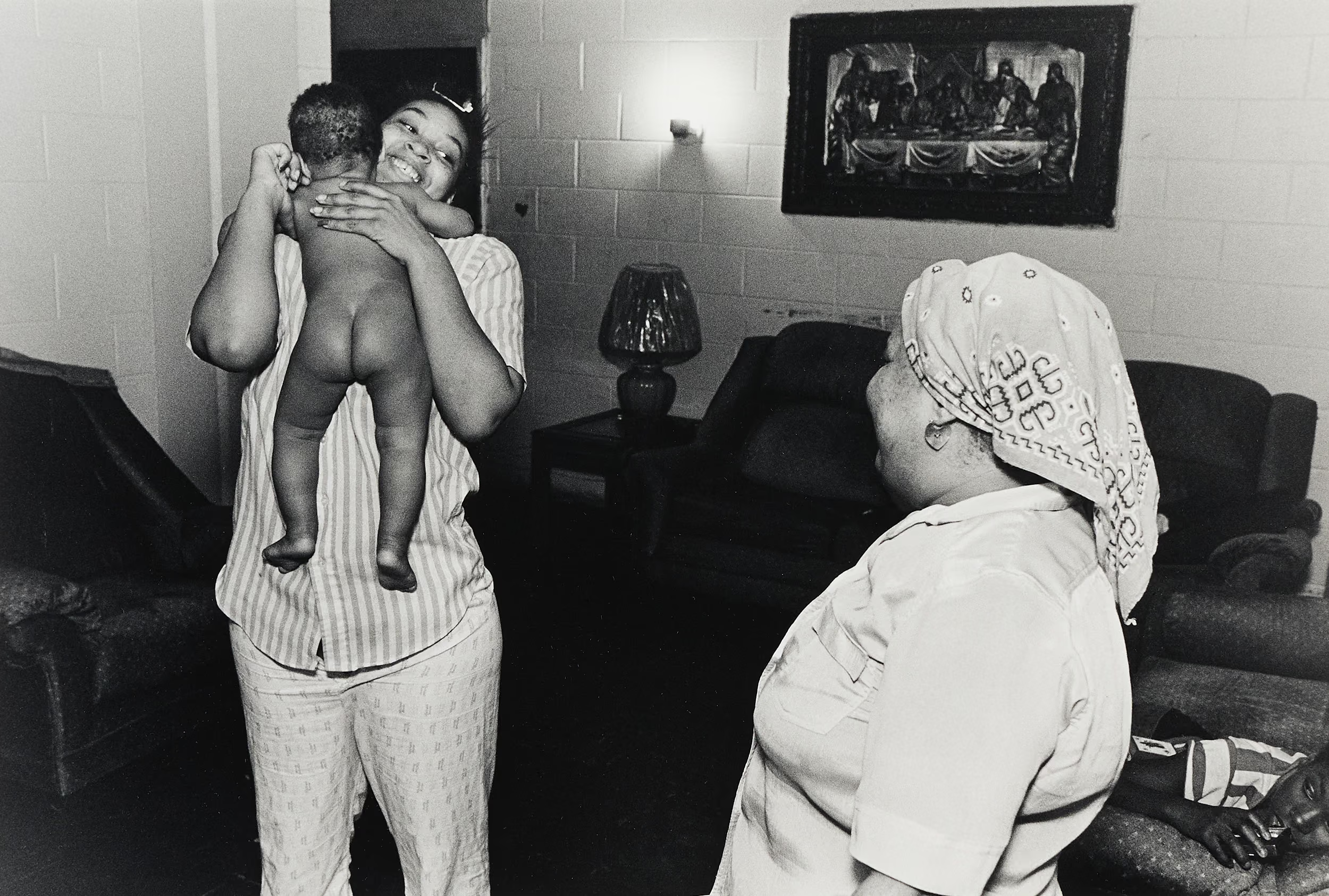
Meg Gerken, Ivory and His Grandma, Jean, Looking Up and Great-Aunt Mel, Chicago, 1989
"What’s love between a momma and their boys? Like Marjorie Garnes. She said, I’m going raise this boy to be the best husband in the world…It is Emmett, and his mother, and his grandmother. Alma. We don’t know enough about her. She’s giving him what she gave her."
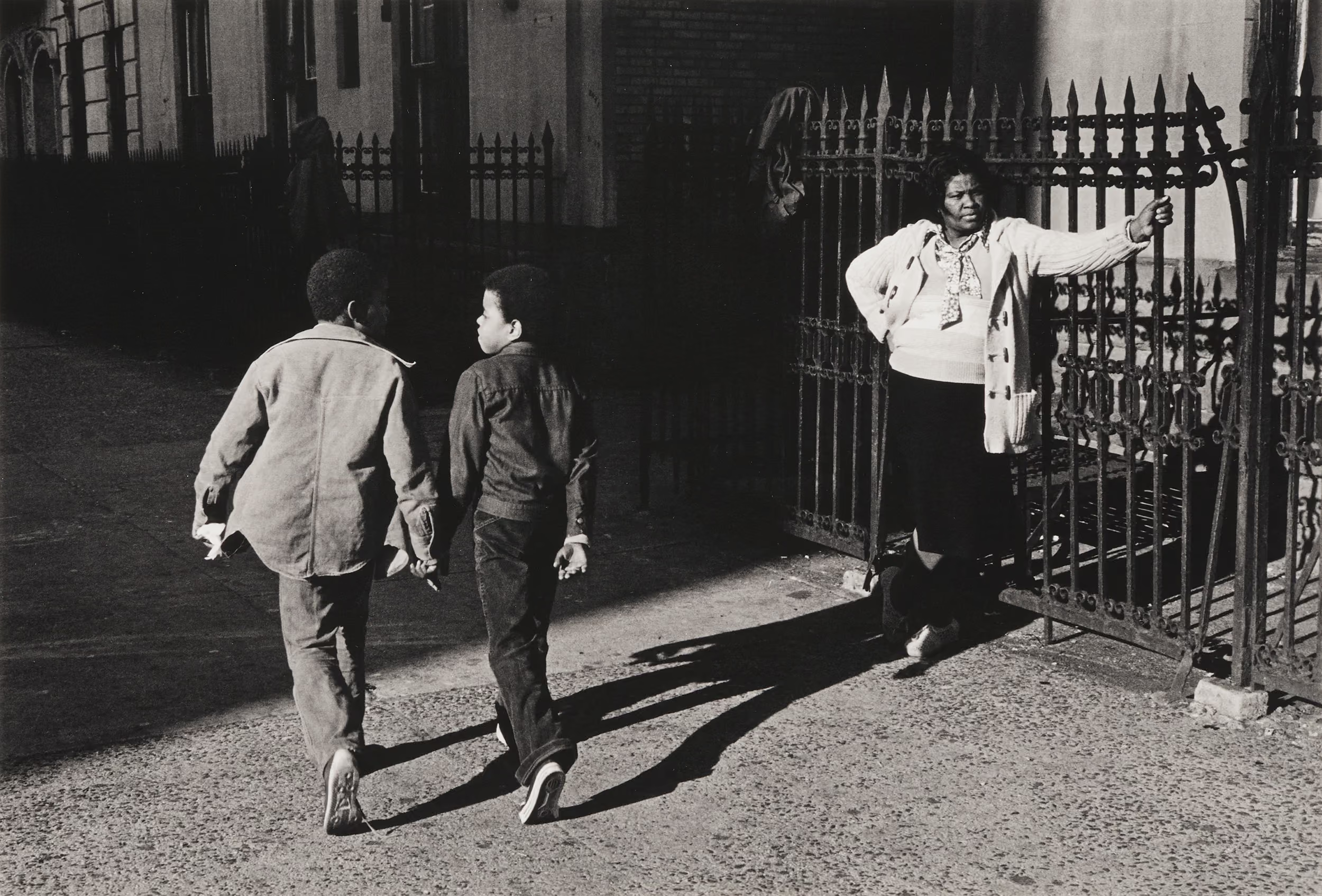
Dawoud Bey, A Woman And Two Boys Passing, from the "Harlem, USA" portfolio, 2005
"Everybody has a calling. Everybody. Everybody. I think Till, I call him Bobo, I think he'd have been a natural leader in helping people to find their niche in life and to fulfill their niche. He still does it in death. He still speaks. We are our brothers' keeper. That's what I said when we [reinterred] his body back to the grave [in 2005]. He's still speaking."
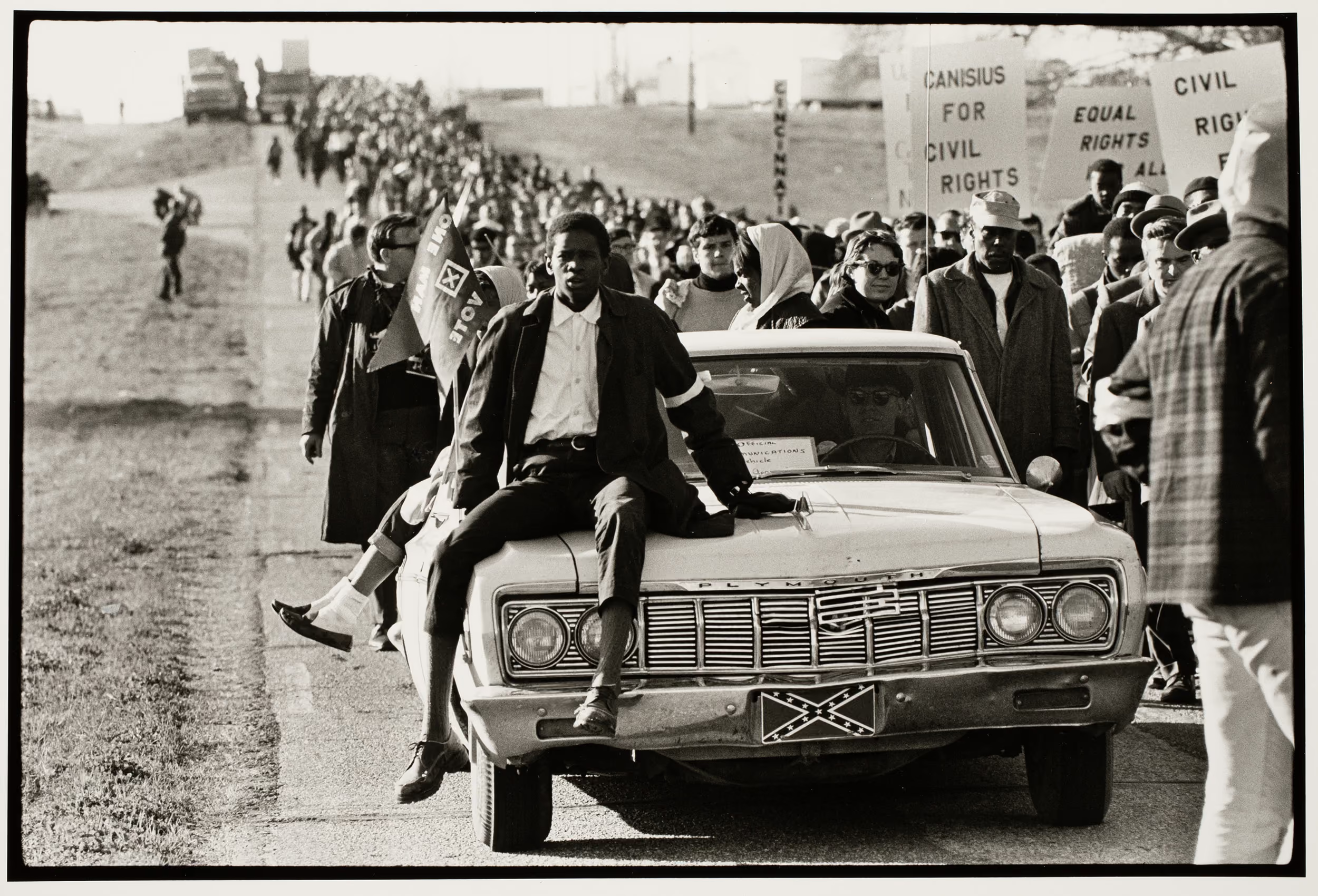
Bruce Davidson, Untitled, 1965
"He had no bashfulness–he was going to be out there in front, no two ways about it. There was no question. The spotlight belonged to him."
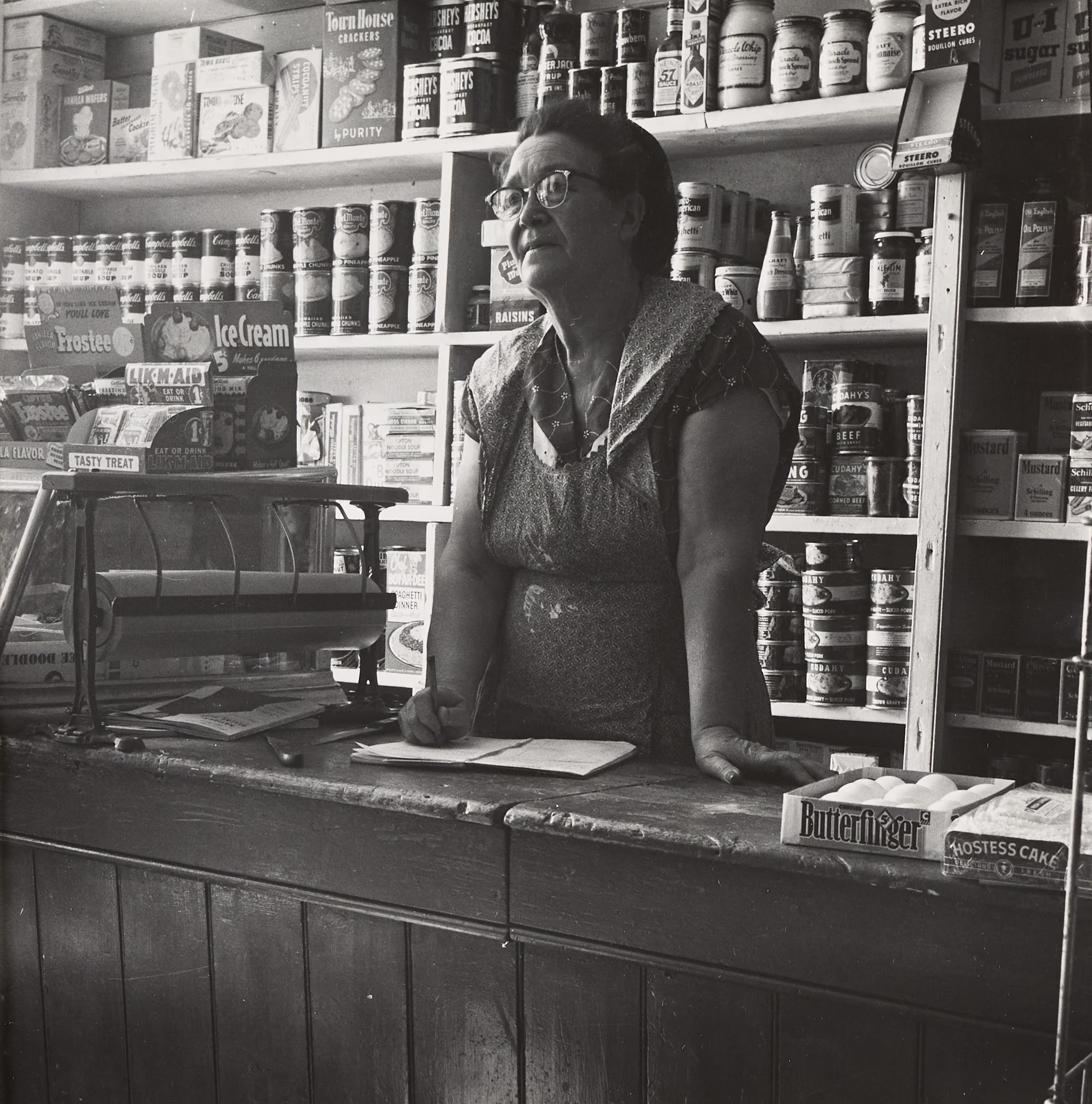
Dorothea Lange, Toquerville, Store in Summer, 1953
"I went to a store in Sumner just like this one and had a flashback. All the way back. That fear. I said oh I have to get out of here."
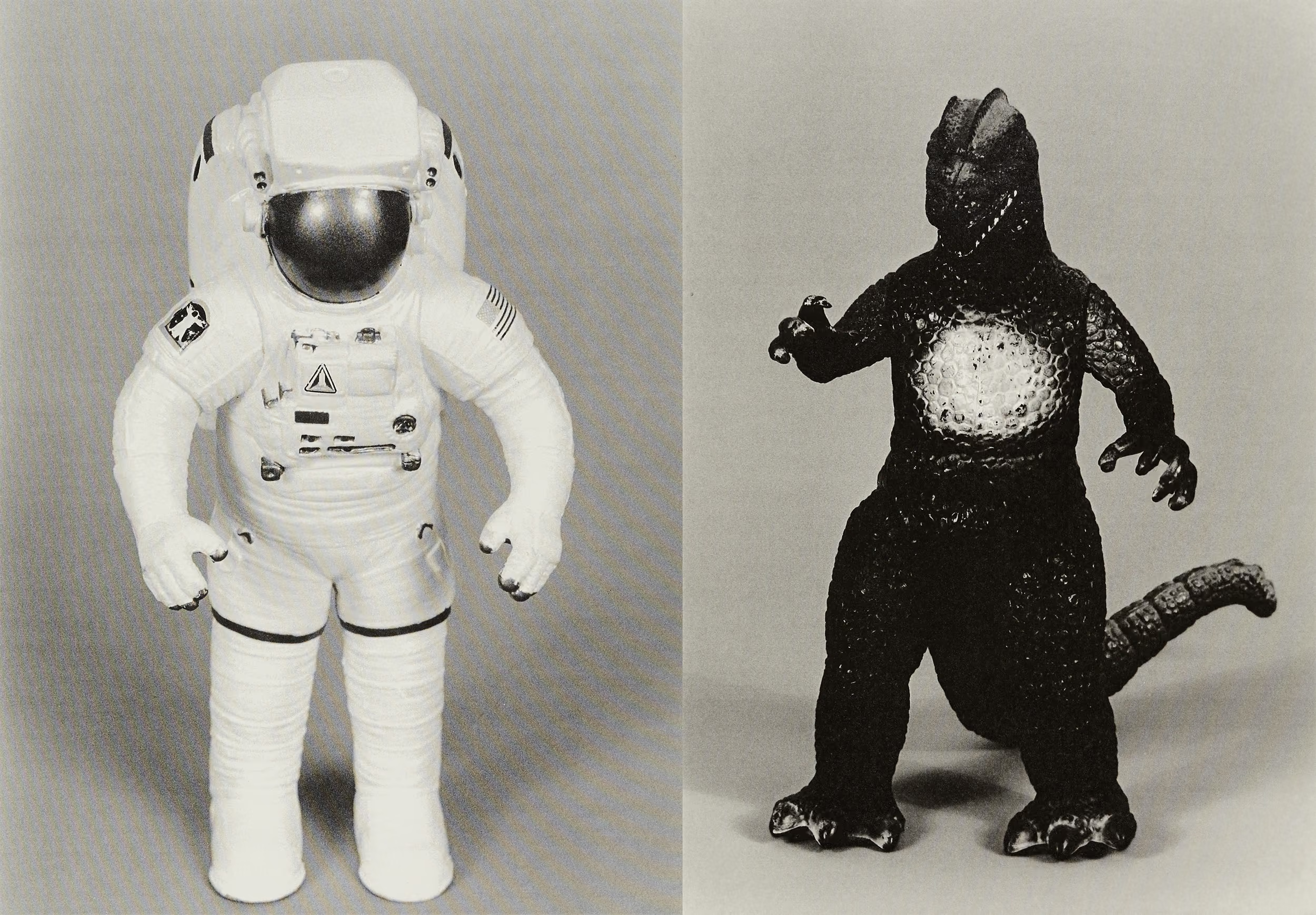
Left: Christian Boltanski, Favorite Objects: Astronaut, 1998 Right: Christian Boltanski, Favorite Objects: Godzilla, 1998
"If it became something popular, it was going to attract his attention. So even though the astronaut era came later, he would have been influenced by it. He would have been fascinated by Godzilla for sure. We went down to the Museum of Natural History where they had a big gorilla on display. It was much bigger than life size."
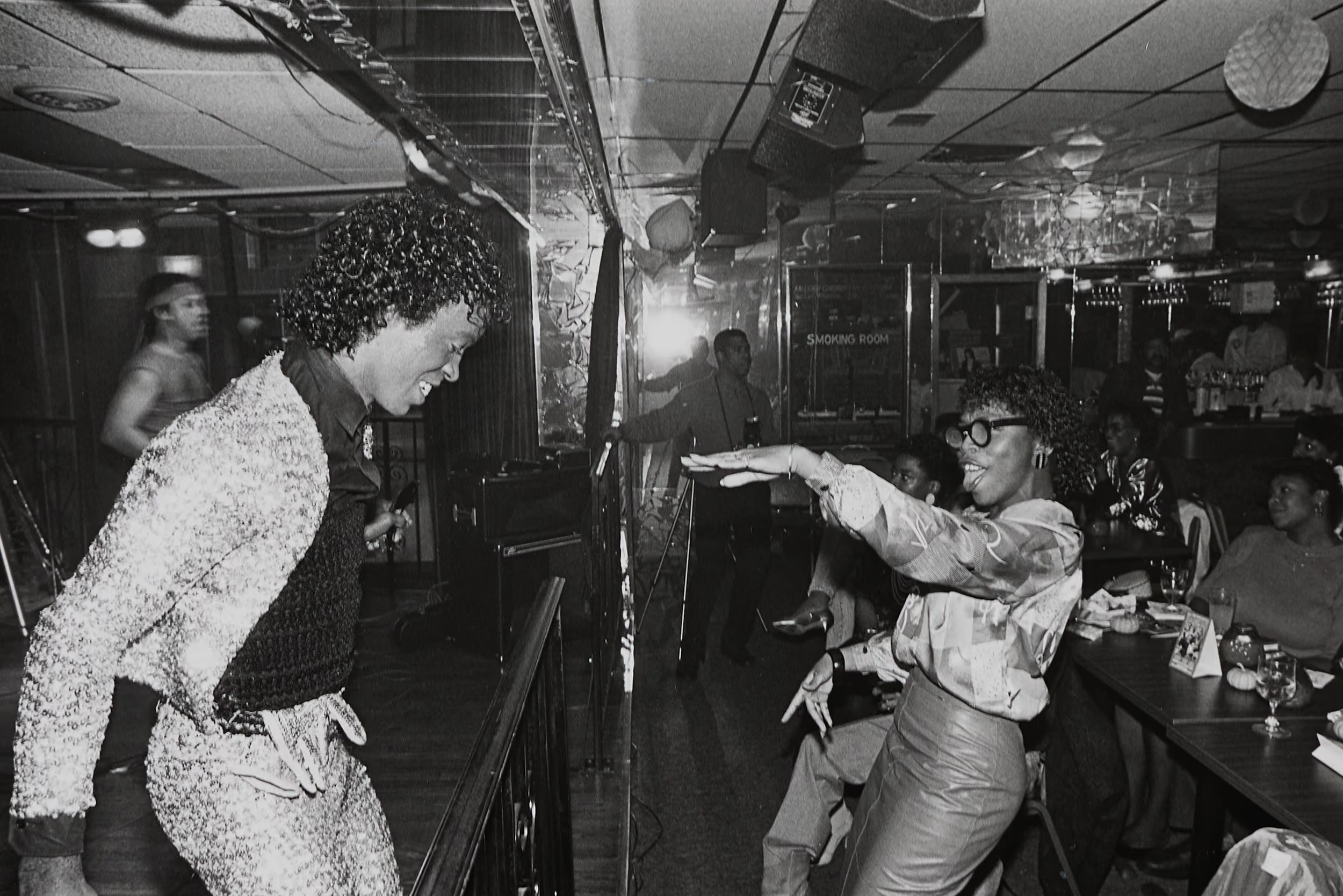
Stephen Marc, 45th and Cottage Grove, (Michael Jackson Impersonator), 1989
"Emmett never had a dull day in his life–he’s nothing like he's portrayed–just full of life. And I say he's a typical Leo, the Leo of all Leos. He had a great time. He said life owed him nothing because he enjoyed it immensely. He enjoyed it to the full."
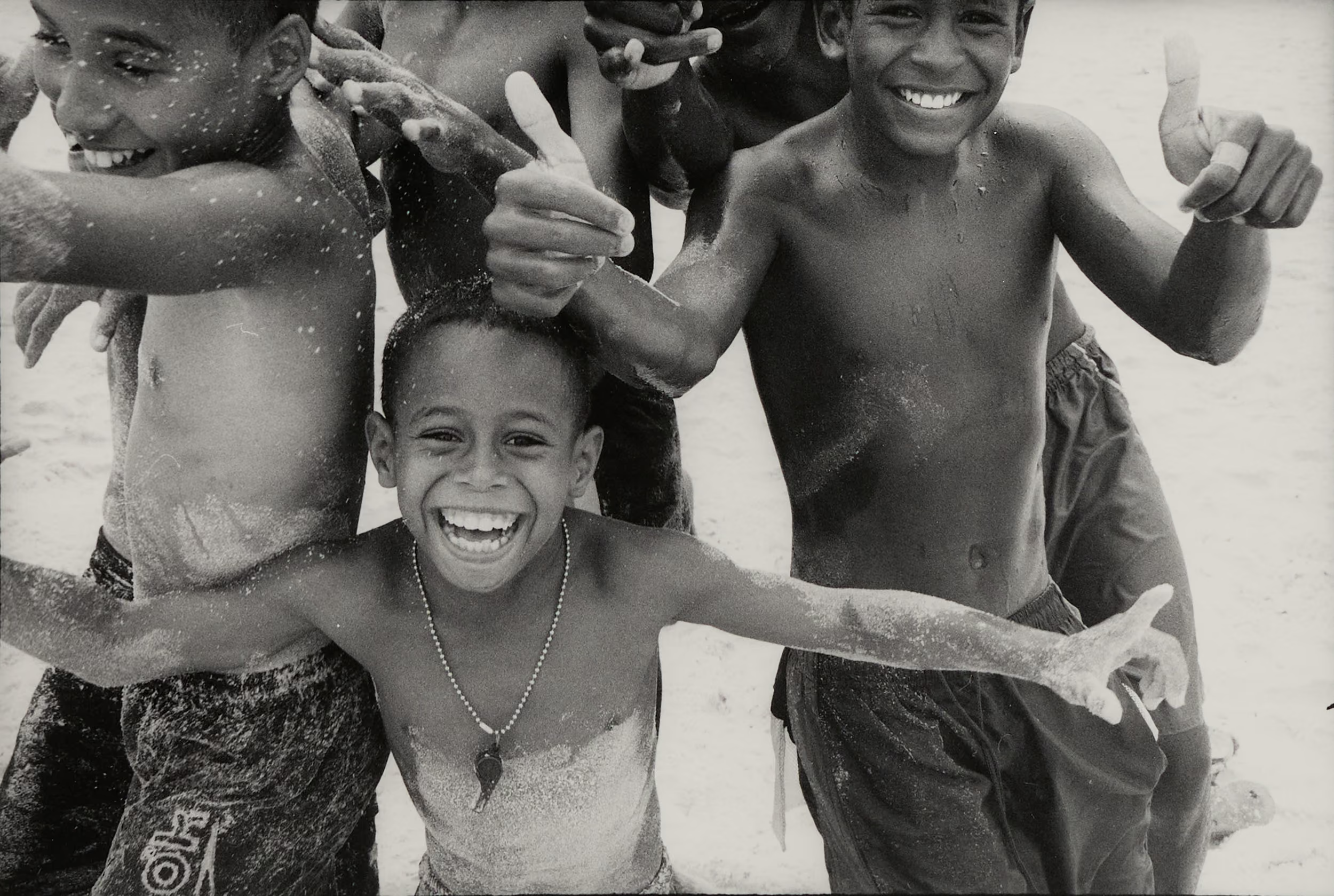
Paul Dahlquist, Boys at the Beach, 2004
"We would go to Silver Beach in St. Joe, Michigan. There was an amusement park, the merry-go-round. He loved that water. My goodness, we loved that water. We loved that water like a hog loves slop. It was ideal. It could be us."
In the Press

"[If Emmett Till Lived] imagines not only the young life Emmett lost, but the decades he was denied."

"It is a call to remain hopeful about what's possible on American ground..."

"As the struggle for basic equality carries on...a new exhibition asks what Till's life would have been had he lived."

“...a reminder of how an image can transform the imagination."

"[Lewis and Parker] ask the nation to consider who gets to be remembered on American soil and how the country chooses to see its history."

“We’re honoring the work that [Mamie Till-Mobley] began.”

About Sarah Elizabeth Lewis
Sarah Elizabeth Lewis is the founder of Vision & Justice and currently the John L. Loeb Associate Professor of the Humanities and Associate Professor of African and African American Studies at Harvard University. An award-winning author, her books and edited collections include The Unseen Truth, The Rise, Carrie Mae Weems, “Vision & Justice,” Coreen Simpson, and Race Stories. Lewis is the recipient of numerous honors and was named to the 2026 TIME List, The Closers, in recognition of her work toward greater equality in the United States.
.png)
About MoCP
Museum of Contemporary Photography at Columbia College Chicago (MoCP) is a premier college art museum dedicated to photography. As an accredited art museum with the American Alliance of Museums, MoCP is a renowned, photography-specific institution whose mission is to generate ideas and provoke dialogue through groundbreaking exhibitions, innovative programs, and experiential events to cultivate a deeper understanding of the artistic, cultural, and political roles of photography in our world today.
Founded in 1976 by Columbia College Chicago as the successor to the Chicago Center for Contemporary Photography, the Museum of Contemporary Photography began collecting in 1979 and has since grown its collection to include nearly 18,000 artworks by 2,000 artists.
Museum of Contemporary Photography Chief Curator and Deputy Director Karen Irvine is acting as coordinating curator for the exhibition, If Emmett Till Lived: Freedom on American Ground, with Krehbiel Family Curatorial Fellow Deanna Whitlow as assistant coordinating curator.

About Vision & Justice
Vision & Justice, founded by Sarah Lewis at Harvard University, is an award-winning initiative that produces original research, curricula, and public programs exploring the foundational role of visual culture in America’s representational democracy. Through collaborations, convenings, publications, and public engagement, the initiative advances representational excellence.
Since its founding, Vision & Justice has become a national platform for interdisciplinary dialogue and cultural collaboration. It has convened landmark gatherings, including Vision & Justice at Harvard University’s Radcliffe Institute (2019) and Vision & Justice Now at the Ford Foundation (2025), bringing together leaders from the arts, humanities, journalism, philanthropy, and public life. The initiative also advances its mission through the Vision & Justice Book Series, published by Aperture, which recovers and amplifies the work of historically underrecognized black photographers and lens-based artists.
Vision & Justice Research Fellow, Jessica Williams Stark, serves as guest curatorial associate for the exhibition, If Emmett Till Lived: Freedom on American Ground with Caro Campos as Research Fellow, Janice Moynihan as Project Assistant, and Natalie Cooper as Vision & Justice Intern.
Support for this Exhibition
Lead support for If Emmett Till Lived: Freedom on American Ground is provided by the Terra Foundation for American Art, the Henry Luce Foundation, the John D. and Catherine T. MacArthur Foundation, and the African American Cultural Heritage Action Fund, a program of the National Trust for Historic Preservation. This project is funded in part by the Wyeth Foundation for American Art, the David C. and Sarajean Ruttenberg Impact Fund for Photography, a museum endowment, the Lewis Foundation, and the Vision & Justice Fund through Sarah Elizabeth Lewis. The Charles F. Kettering Foundation is proud to partner with Vision & Justice on the If Emmett Till Lived initiative.
The Museum of Contemporary Photography is supported by Columbia College Chicago, the MoCP Advisory Board, Museum Council, individuals, private and corporate foundations, and government grants.
The 2026–2027 exhibition season is sponsored in part by the Comer Family Foundation, Efroymson Family Fund, Henry Nias Foundation, the Phillip and Edith Leonian Foundation, the Pritzker Traubert Foundation, the Rowan Foundation, and the Venable Foundation. MoCP also acknowledges support from the Illinois Arts Council and a CityArts grant from the City of Chicago Department of Cultural Affairs and Special Events.