Imaginings
Visions of a Life Reclaimed
For the exhibition and publication, civic and cultural leaders, advocates, and artists selected photographs from the Museum of Contemporary Photography at Columbia College Chicago’s permanent collection and contributed brief reflections on their hopes for Emmett Till had he returned home, alive and free. These images do more than document the world—they invite us to imagine what was denied and what remains possible.
We invite you to sit with these selections, to reflect alongside their contributors, and to consider the life Emmett Till deserved, and that we live for him today.



0/0
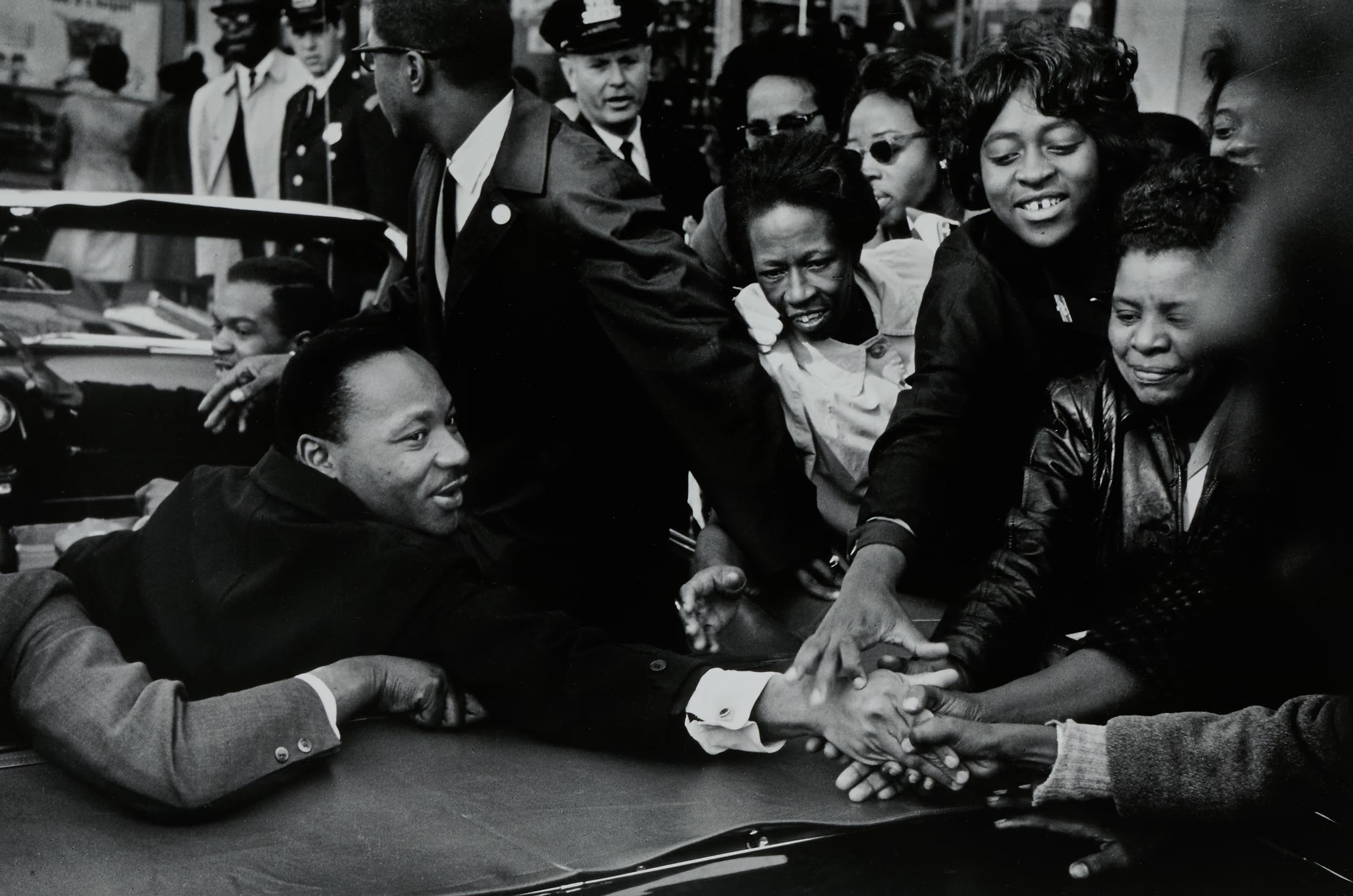
Leonard Freed, Dr. Martin Luther King Jr., Parade, after Nomination for Nobel Peace Prize, Baltimore, Maryland, 1964
Reflection By
Lonnie G. Bunch III, Secretary of the Smithsonian
We often overlook the magnetism of Dr. King as reflected, not in a funeral speech, but in this interaction in black Baltimore. King symbolized the possibilities that were denied to many in Jim Crow America.
Community Reflections
Share your reflection
Emmett Till would be in his eighties now. Somewhere in the space between the boy he was and the man he never became lives a question worth sitting with: What if he had lived? Add your reflection to a growing archive of others imagining:
- What if Emmett Till lived?
- What would his life have required of us all?
- What are your hopes for Emmett Till’s unlived life?
- How does Emmett Till still live today?
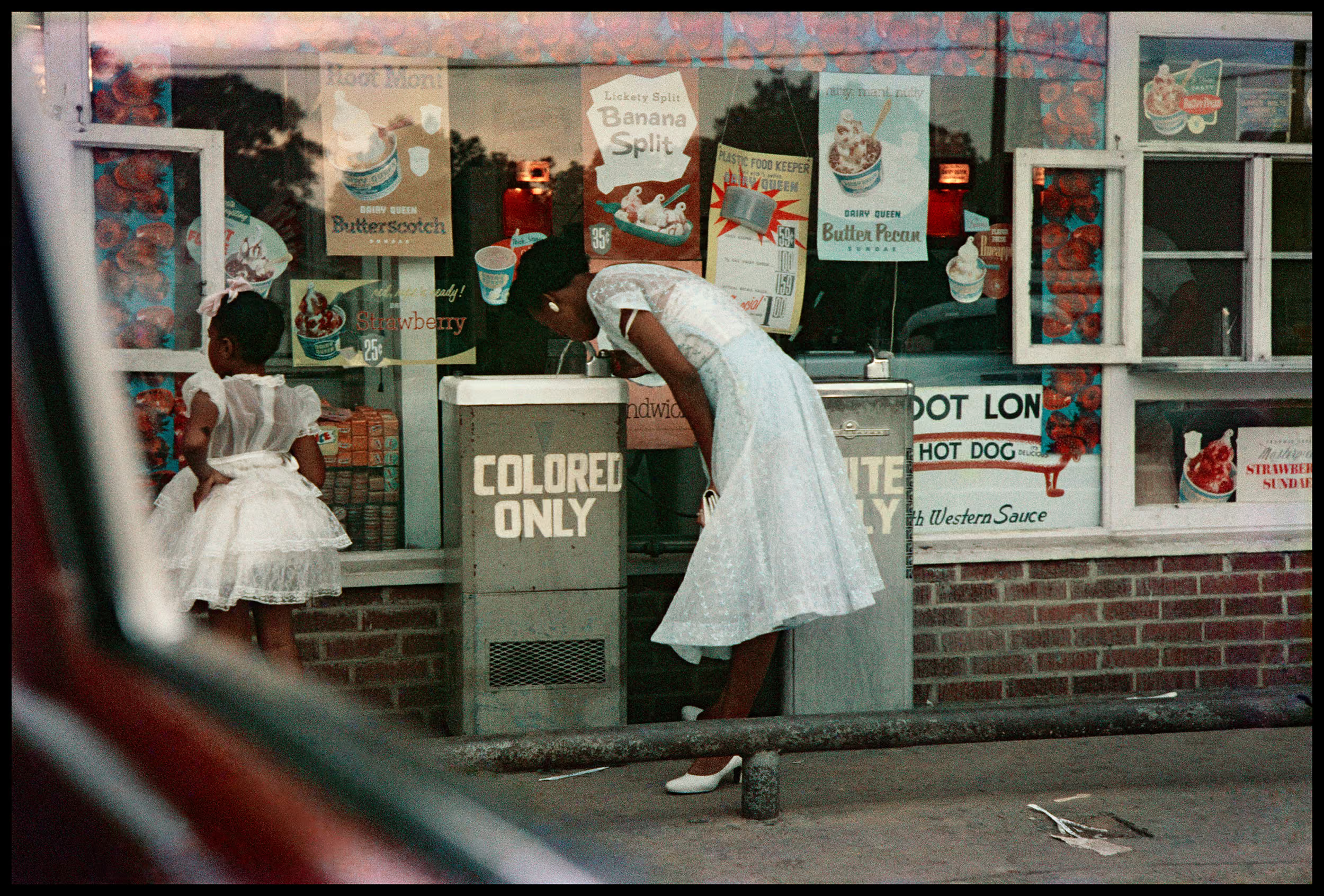
Gordon Parks, Drinking Fountains, Mobile, Alabama, 1956
Reflection By
Lonnie G. Bunch III, Secretary of the Smithsonian
The richness of the color photograph captures both the daily indignities of segregation and the manner in which the subjects' clothing speaks of resiliency and an unwillingness to accept second-class citizenship.
Community Reflections
Share your reflection
Emmett Till would be in his eighties now. Somewhere in the space between the boy he was and the man he never became lives a question worth sitting with: What if he had lived? Add your reflection to a growing archive of others imagining:
- What if Emmett Till lived?
- What would his life have required of us all?
- What are your hopes for Emmett Till’s unlived life?
- How does Emmett Till still live today?
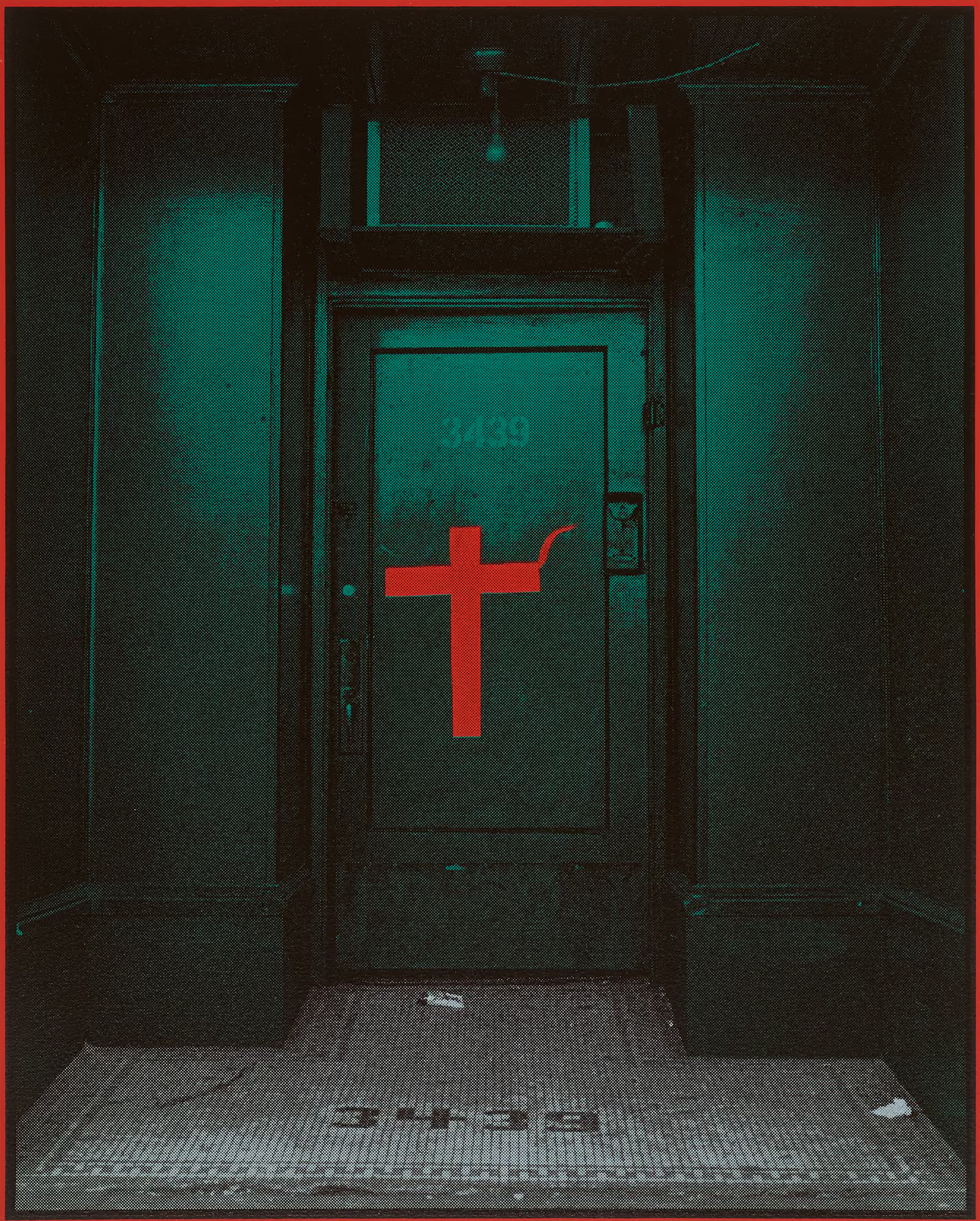
Karen Savage, Storefront Symbol, West Chicago Ave., from the Printmaking at the School of the Art Institute portfolio, 1975
Reflection By
Lonnie G. Bunch III, Secretary of the Smithsonian
The impact of black migration transformed both the West Side and South Side of Chicago. Whether in Alabama or Chicago, the church, in a storefront or a cathedral, was part of the glue that helped the community in the transition from a rural community to an urban environment.
Community Reflections
Share your reflection
Emmett Till would be in his eighties now. Somewhere in the space between the boy he was and the man he never became lives a question worth sitting with: What if he had lived? Add your reflection to a growing archive of others imagining:
- What if Emmett Till lived?
- What would his life have required of us all?
- What are your hopes for Emmett Till’s unlived life?
- How does Emmett Till still live today?
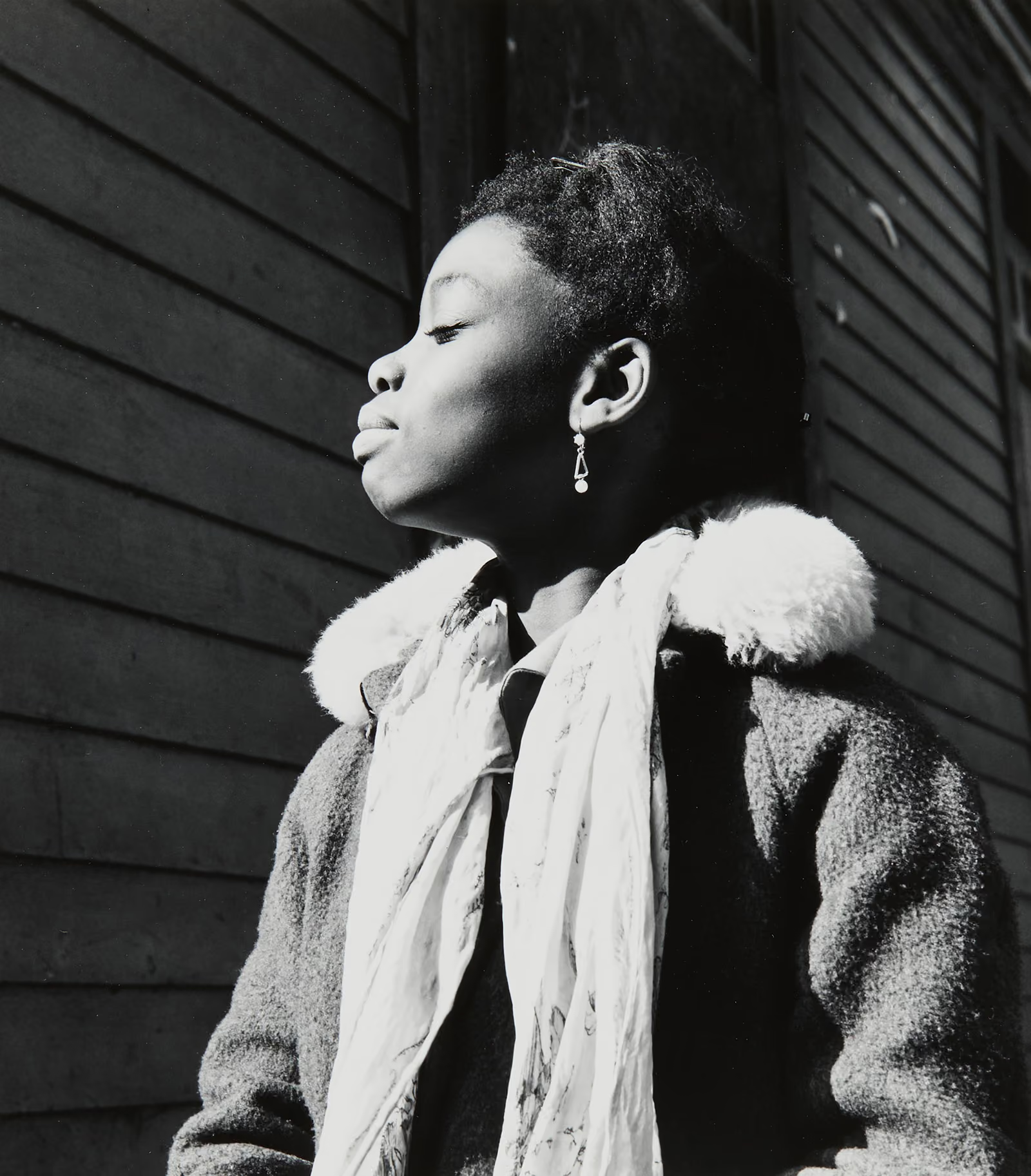
Milton Rogovin, East Side, 1961
Reflection By
Ava DuVernay, Filmmaker
Photographer Milton Rogovin found her on the East Side in 1961. A young sister leaning into daylight, eyes closed, chin lifted to the future. When I gaze upon her, it is impossible not to think of what Emmett Till never got to have. The hand of a girl like this to hold. He was fourteen when they took him, but before that, he was just a boy becoming something else. His mom, Mamie, had spied on him in the basement with his friends, a bottle spinning on the floor, and she laughed because that's what boys do when they are learning that girls are interesting after all. What we contemplate here is the girl that Emmett never got to meet. The one who would have danced with him to his favorite artist, Bo Diddley, and who would have held his hand, and listened to his fears, and to his dreams. Rogovin's image of this sweet sister reminds me of what youth is. Leaning into the light. Turning toward something she cannot yet name. This is what was stolen from Emmett. All the wonders of becoming . . . and the sweetness of someone choosing you.
Community Reflections
Share your reflection
Emmett Till would be in his eighties now. Somewhere in the space between the boy he was and the man he never became lives a question worth sitting with: What if he had lived? Add your reflection to a growing archive of others imagining:
- What if Emmett Till lived?
- What would his life have required of us all?
- What are your hopes for Emmett Till’s unlived life?
- How does Emmett Till still live today?
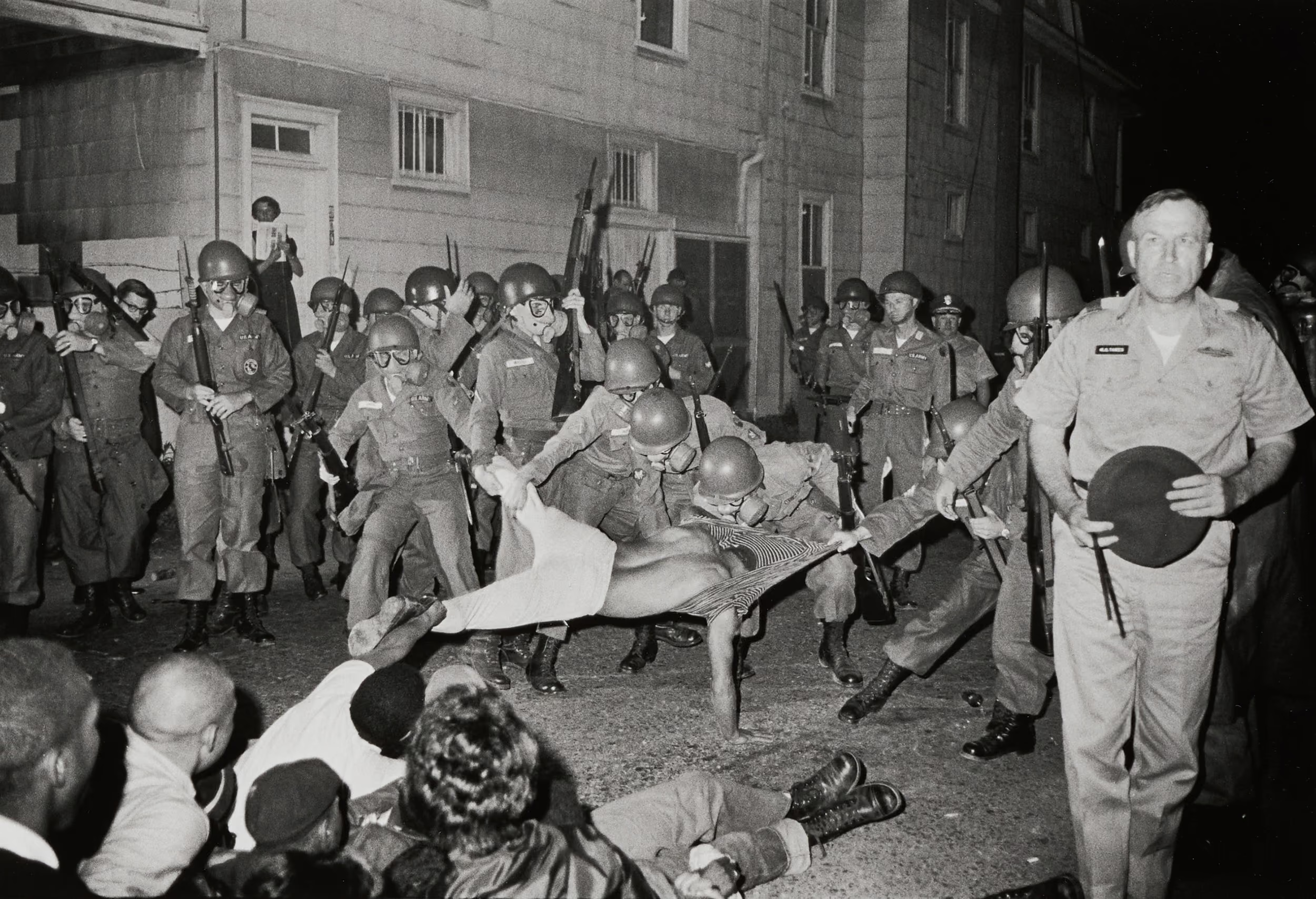
Danny Lyon, Clifford Vaughs, another SNCC photographer, is arrested by the National Guard, 1964; printed 2010
Reflection By
Hank Willis Thomas, Artist
Danny Lyon's iconic image of photographer Clifford Vaughs being torn between Maryland National Guard Service members and Student Nonviolent Coordinating Committee (SNCC) members during the "Cambridge movement" protests of the 1960s pierced my soul the moment I saw it. I could almost feel the tension and fear flowing through his body. It was as if he was being torn between "the people" and "the system." This piece became more profound for me when I learned that Vaughs would go on to create the even more iconic "Captain America" motorcycle for the film Easy Rider and was inspiration for the film that he was eventually written out of.
Community Reflections
Even as this image of suspension evokes the exercise of state sovereignty over the body, I see that Clifford Vaughs, too, performs sovereignty over himself. A SNCC training manual notes: “[Falling] is intended to protect the most vital parts of the body… it is often wise to place yourself between the attackers and the victim… face down, approximating the position of a person doing a ‘push-up’ on the ‘up’ part, but keeping your face down and tucked into your chest.” Drawing on Sarah Lewis’ scholarship, Vaughs’ reclaimed sovereignty over his body is one of disciplined release in the arena of suspension between the state and his comrades—notably Kwame Ture pulling his right leg.
- Caro Campos, Cambridge, MA
Share your reflection
Emmett Till would be in his eighties now. Somewhere in the space between the boy he was and the man he never became lives a question worth sitting with: What if he had lived? Add your reflection to a growing archive of others imagining:
- What if Emmett Till lived?
- What would his life have required of us all?
- What are your hopes for Emmett Till’s unlived life?
- How does Emmett Till still live today?
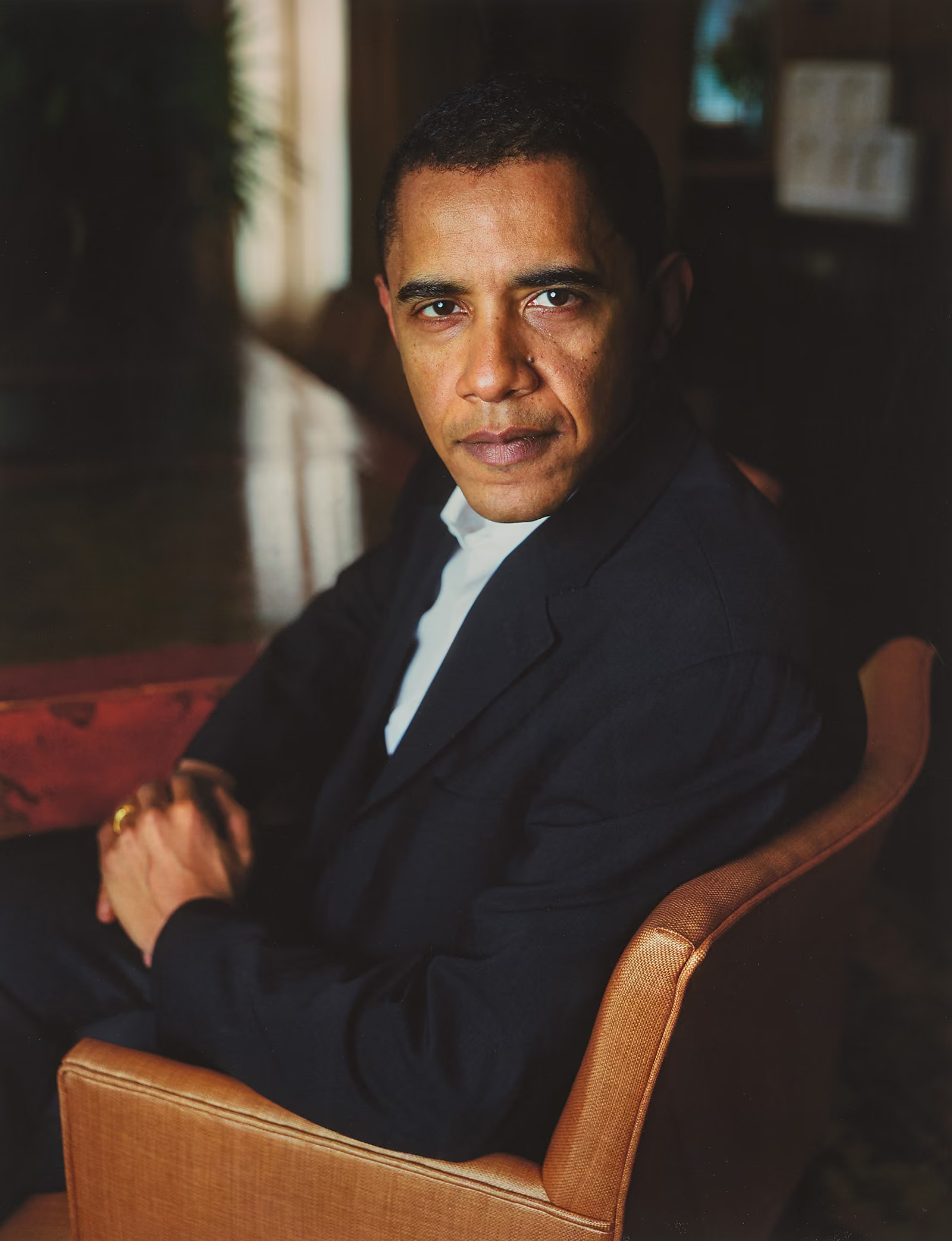
Dawoud Bey, Barack Obama, 2006
Reflection By
Hank Willis Thomas, Artist
Dawoud Bey was one of the first photographers I ever met. I was five or six years old. His visual language is emblazoned in my subconscious. Legacy, history, and the quiet gravity of Black life have always been central to his vision. His portrait of Barack Obama is a profound example of this.
There are many conflicting thoughts I have regarding this image. Chief among them is the question: Could there ever have been a President Barack Hussein Obama if Emmett Till had lived? Would Dawoud Bey have become a photographer? How many lives were lost in the struggle for human rights in this country for space and time to converge at this decisive moment?
President Obama's eyes pierce the lens of Bey's camera and seem almost to look into my soul. They appear to ask: Do you see me? Do you see yourself in me? I am here, now, with you. I am you.
In the context of If Emmett Till Lived, this image carries an almost impossible weight. Here is a Black man, born at the height of the Civil Rights Movement, photographed by a Black artist with the dignity and gravity of formal portraiture. For generations, this exchange—a Black photographer making an image of a Black president—would have been unimaginable within the structures of American power.
Emmett Till was denied the chance to grow into a man, to be honored, to age into possibility. This photograph allows us to sit with one version of what history fought to make possible: a Black man looking directly into the camera, and into us, with the full force of his humanity intact.
The image becomes not only a portrait, but a measure of time, survival, and collective transformation.
Community Reflections
Share your reflection
Emmett Till would be in his eighties now. Somewhere in the space between the boy he was and the man he never became lives a question worth sitting with: What if he had lived? Add your reflection to a growing archive of others imagining:
- What if Emmett Till lived?
- What would his life have required of us all?
- What are your hopes for Emmett Till’s unlived life?
- How does Emmett Till still live today?
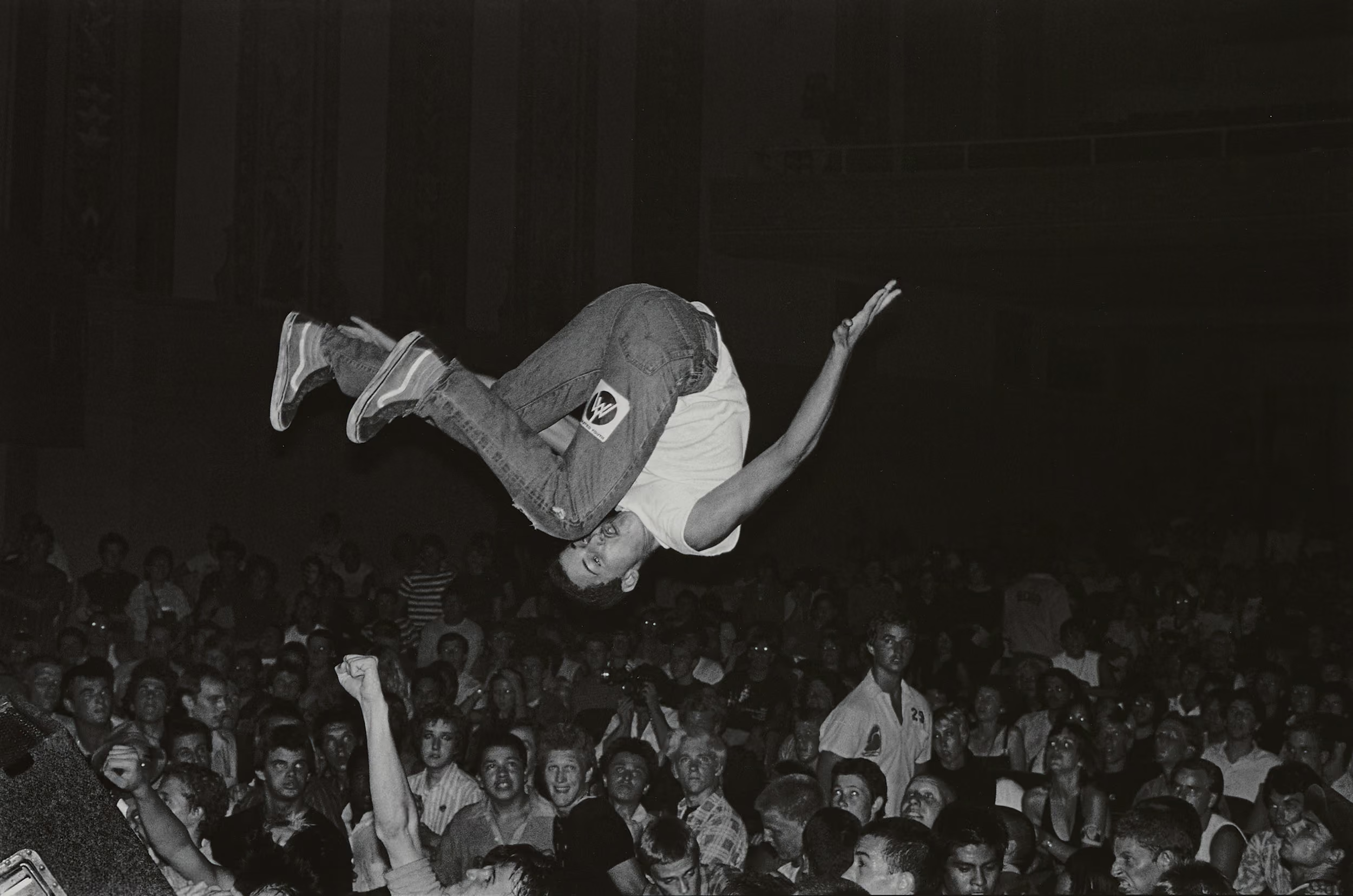
Edward Curtiss Colver, Wasted Youth Flip, 1981
Reflection By
Hank Willis Thomas, Artist
This image holds the feeling of becoming airborne before you know where you will land. A body suspended in space, upside down and almost weightless, surrounded by a crowd below. There is risk in it, but also freedom. The kind of freedom that comes from trusting your body, trusting the moment, and refusing to be defined by fear or failure.
This photograph reminds me that Black life is not only struggle or survival. It is also motion, rhythm, daring, and release.
There is something sacred about seeing a body soar. Here, the body is not contained. It is rising. It is risking everything for the possibility of freedom.
Community Reflections
Share your reflection
Emmett Till would be in his eighties now. Somewhere in the space between the boy he was and the man he never became lives a question worth sitting with: What if he had lived? Add your reflection to a growing archive of others imagining:
- What if Emmett Till lived?
- What would his life have required of us all?
- What are your hopes for Emmett Till’s unlived life?
- How does Emmett Till still live today?
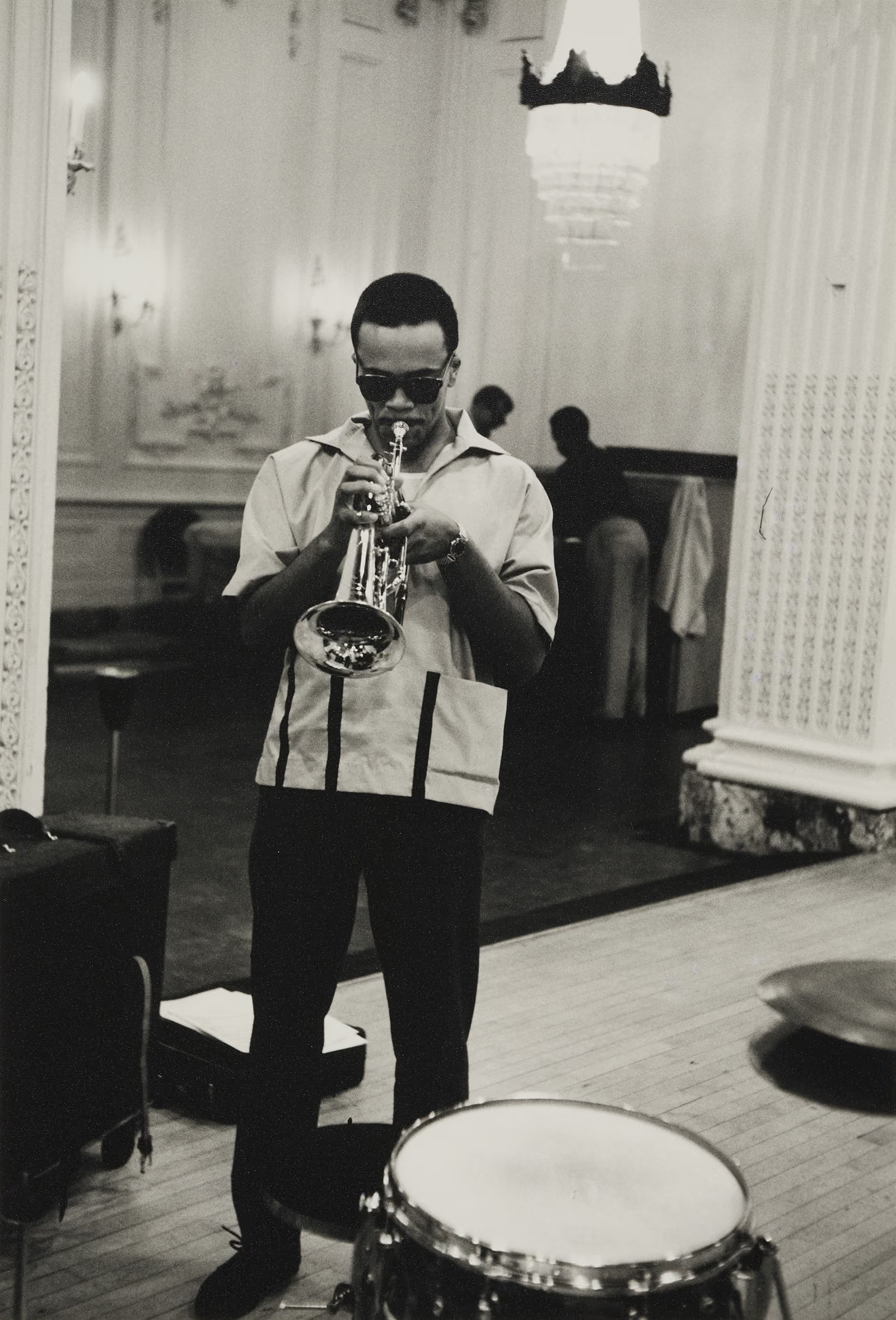
Milton J. Hinton, Quincy Jones, recording studio, NYC, 1957
Reflection By
Deborah Willis, University Professor and Chair, Department of Photography & Imaging, Tisch School of the Arts, New York University
This photograph of Quincy Jones, captured by Milton J. Hinton, holds a quiet intensity—the inward focus of a musician shaping sound in real time. It reminds us that creativity is both discipline and improvisation, a space where Black artistry unfolds beyond spectacle, rooted in concentration, experimentation, and mastery. In the context of If Emmett Till Lived, the image gestures toward unrealized possibility: the lives that might have been shaped through talent, curiosity, and time. It invites us to consider who Emmett Till might have become—what he might have created, contributed, or imagined—had he been allowed the fullness of life.
Community Reflections
The name Emmett means universal, whole, entire, truth, and strength, and has been traced to an Old English place-name, eagemot, 'junction of streams.' Emmett Till went by Bobo, a nickname with French origins meaning 'stutterer' and Slavic origins meaning 'freedom' and 'liberty.' Till spoke with a severe stutter, developed at age six after surviving polio. He spoke at his own pace, in his own way, on his own time.
May we learn from Till to speak slowly with song, through the stutter that comes with living in search of him, the junction of streams. After all, a stutter is repetition and prolongation. May we follow Till as we reach for the repeated and prolonged words, the art, the tools, the music, to render with freedom, with liberty, with strength, the “universal entire truth” we know, and he knew, to be our birthright. Emmett "Bobo” Till speaks.
- Caro Campos, Cambridge, MA
Share your reflection
Emmett Till would be in his eighties now. Somewhere in the space between the boy he was and the man he never became lives a question worth sitting with: What if he had lived? Add your reflection to a growing archive of others imagining:
- What if Emmett Till lived?
- What would his life have required of us all?
- What are your hopes for Emmett Till’s unlived life?
- How does Emmett Till still live today?
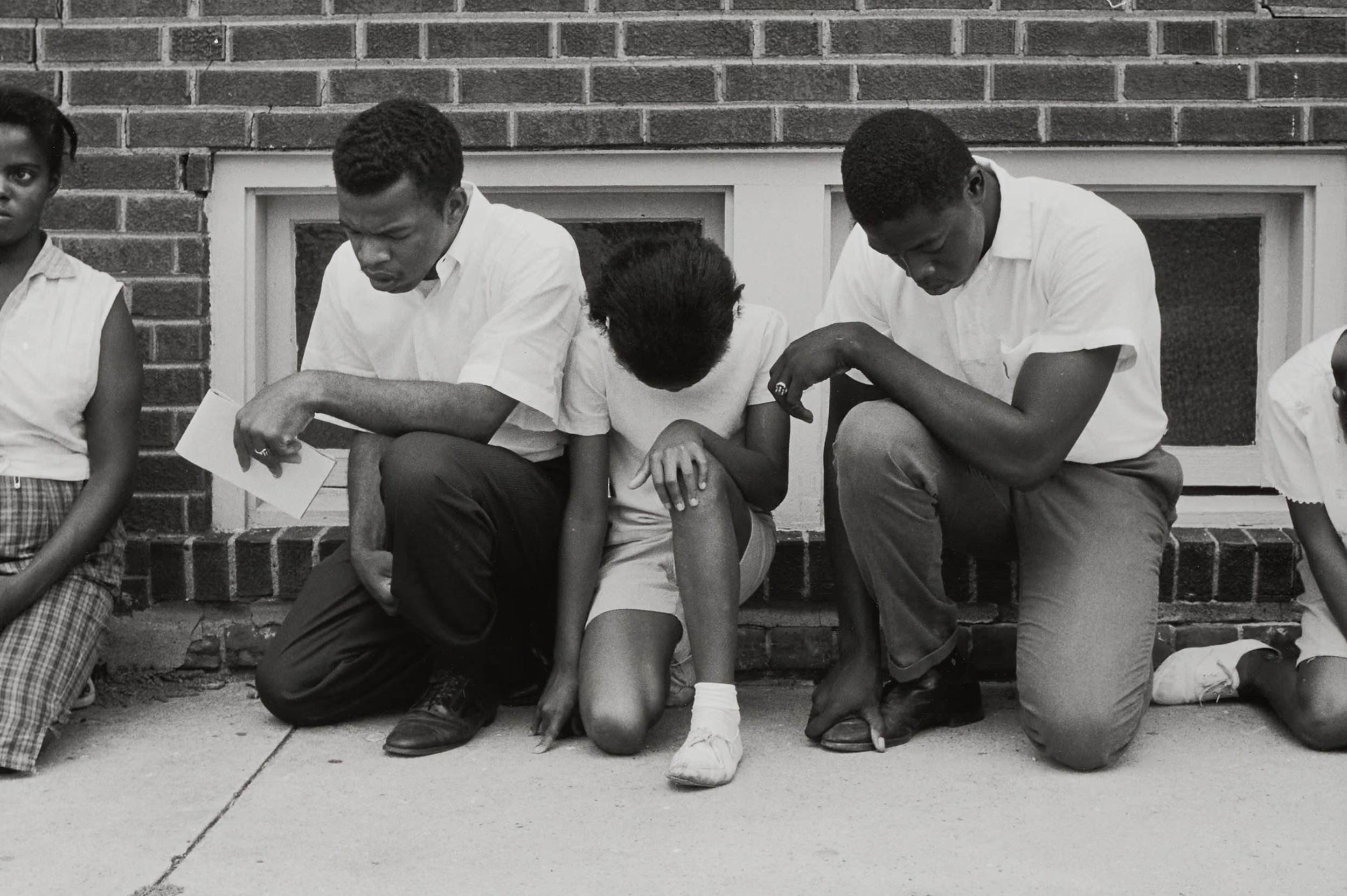
Danny Lyon, John Lewis, future chairman of the SNCC, and others demonstrate at the Cairo pool, which did not allow Blacks, Cairo, Illinois, 1962
Reflection By
Patrick Weems, Founding Director of the Emmett Till Interpretive Center
John Lewis called Emmett Till "my George Floyd," a moment that awakened a generation to the work of preserving equal rights. This image reflects the life Till was denied and the chance to become part of that generation that took to the streets, knelt in prayer, and reshaped the nation. What was taken was not only a life, but a future in the fight for democracy itself.
Community Reflections
Share your reflection
Emmett Till would be in his eighties now. Somewhere in the space between the boy he was and the man he never became lives a question worth sitting with: What if he had lived? Add your reflection to a growing archive of others imagining:
- What if Emmett Till lived?
- What would his life have required of us all?
- What are your hopes for Emmett Till’s unlived life?
- How does Emmett Till still live today?
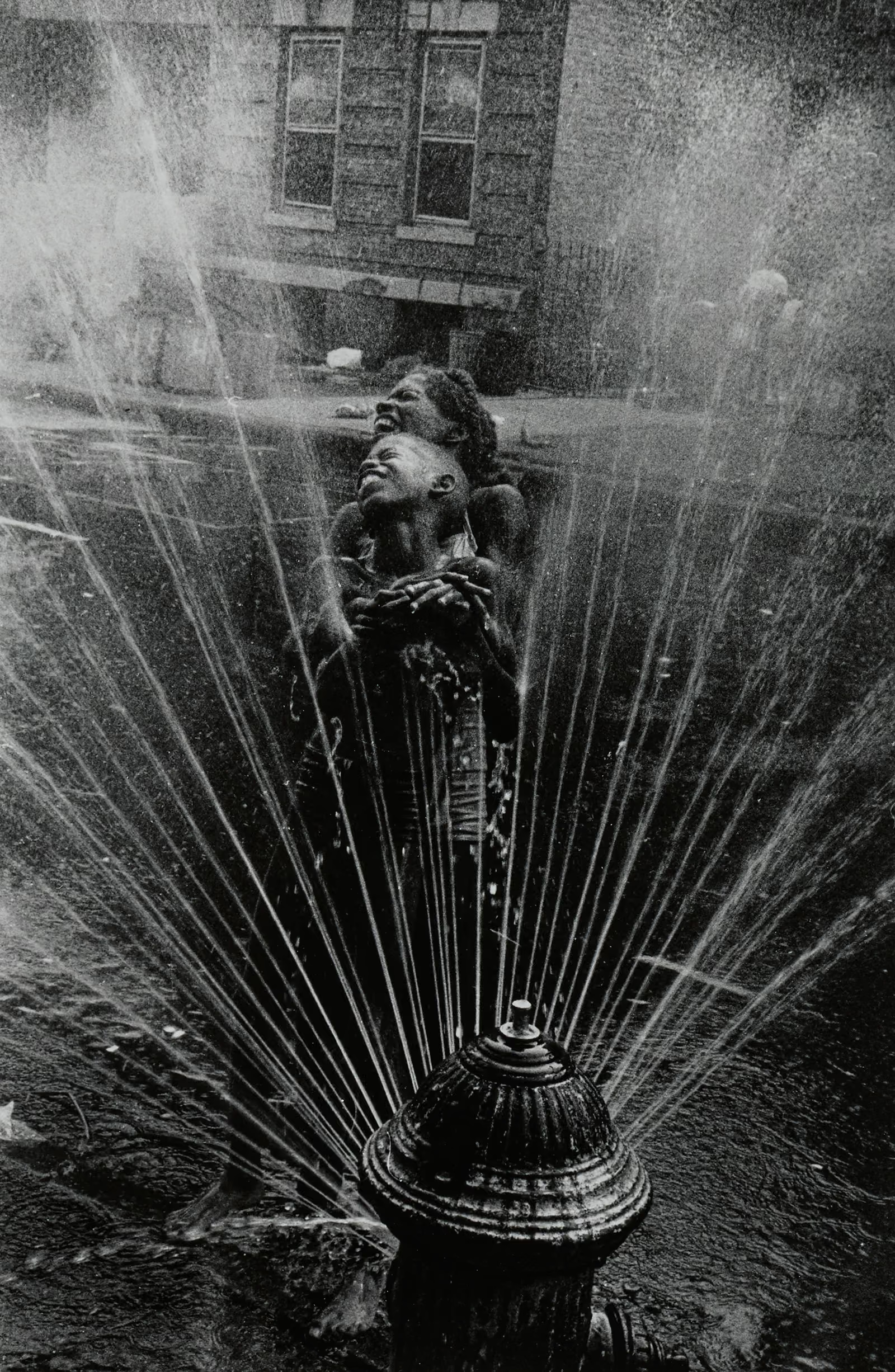
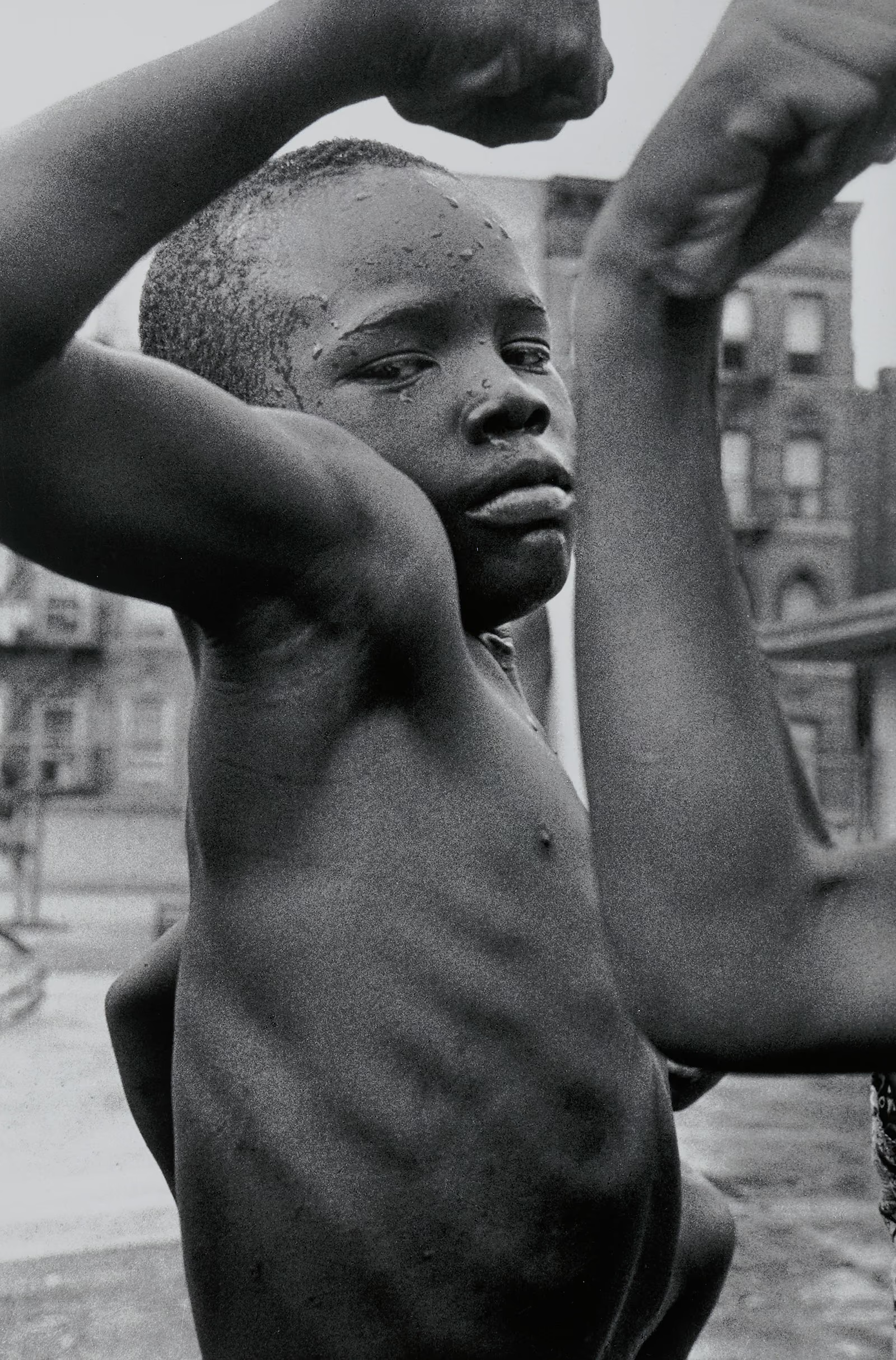
Leonard Freed, Harlem, New York, 1963
Reflection By
John Legend, Artist and Activist
Leonard Freed's photograph shows children gathered around an open fire hydrant on a Harlem street, cooling off during a hot New York summer. Made in 1963 at the beginning of his Black in White America project, the image reflects Freed's focus on everyday Black life during the civil rights era, not only moments of protest or conflict. Scenes like this were central to his work, documenting ordinary experiences alongside the broader struggle for equality. I chose this image because it insists on joy. If Emmett Till had lived, his life would have included afternoons like this one, children playing in the street, water everywhere, laughter you can almost hear. Through our work in Harlem and in education, I have seen how community holds young people, and this photograph captures that truth in a single frame.
Community Reflections
Share your reflection
Emmett Till would be in his eighties now. Somewhere in the space between the boy he was and the man he never became lives a question worth sitting with: What if he had lived? Add your reflection to a growing archive of others imagining:
- What if Emmett Till lived?
- What would his life have required of us all?
- What are your hopes for Emmett Till’s unlived life?
- How does Emmett Till still live today?
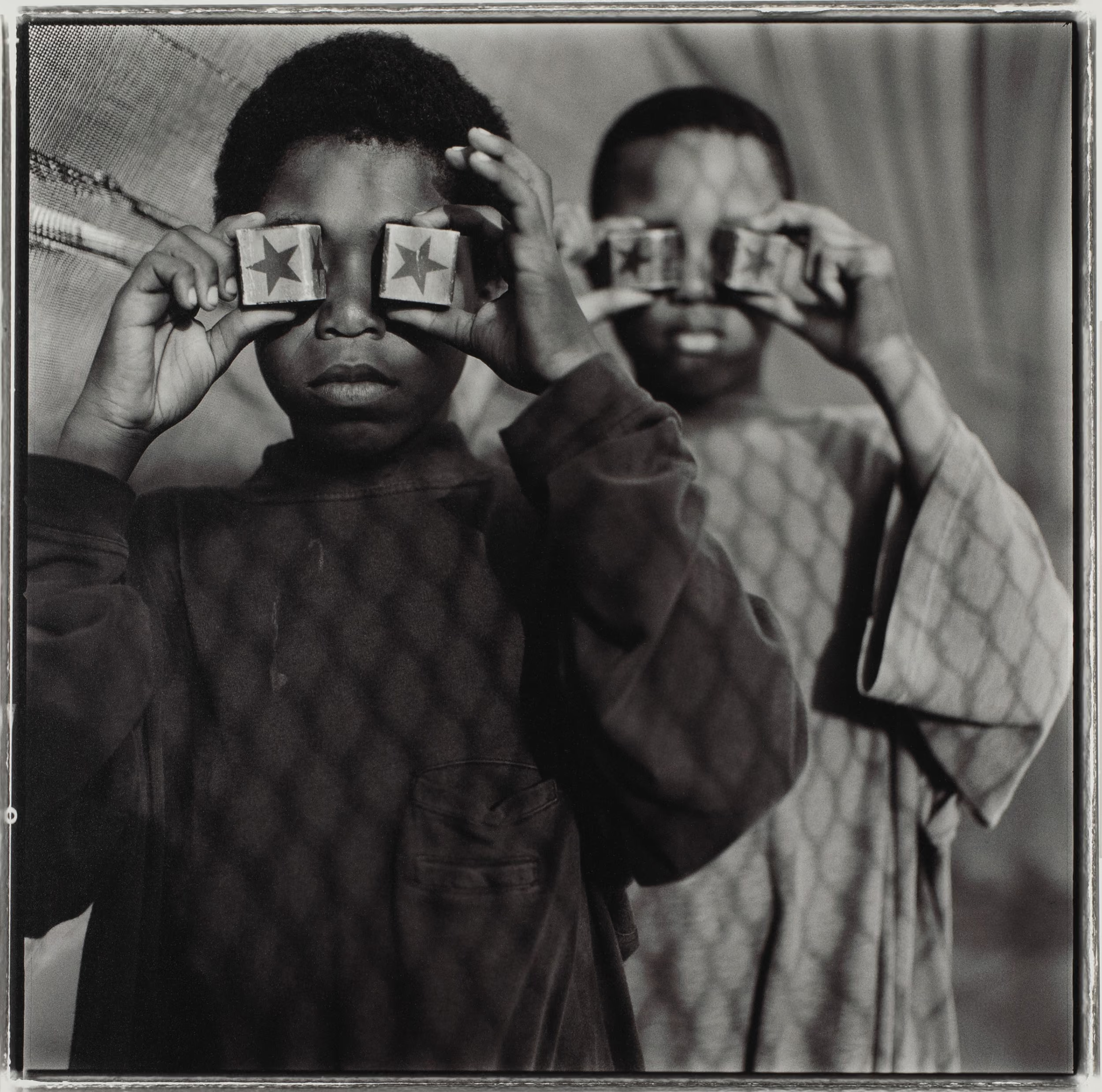
Keith Carter, Stars, 1995
Reflection By
Amy Sherald, Artist
I chose this image for how it holds innocence and obstruction at once—children seeing through symbols, yet partially concealed, echoing how Emmett's story is both witnessed and continually filtered through history.
Community Reflections
Share your reflection
Emmett Till would be in his eighties now. Somewhere in the space between the boy he was and the man he never became lives a question worth sitting with: What if he had lived? Add your reflection to a growing archive of others imagining:
- What if Emmett Till lived?
- What would his life have required of us all?
- What are your hopes for Emmett Till’s unlived life?
- How does Emmett Till still live today?
Paul D'Amato, Boy by Pool, Chicago, 2005
Reflection By
Franklin Leonard, Film Producer
I find it difficult to look at any photo of a Black American in front of a yawning blue body of water without immediately thinking of the Middle Passage. That the body of water here is a pristine swimming pool only sharpens it. But what strikes me most about this Paul D'Amato image is the boy's gaze: Assertive. Directly into the lens. History behind him. Daring you to define him by it. Daring you to see him as anything other than who he'll be on his own terms.
Community Reflections
Share your reflection
Emmett Till would be in his eighties now. Somewhere in the space between the boy he was and the man he never became lives a question worth sitting with: What if he had lived? Add your reflection to a growing archive of others imagining:
- What if Emmett Till lived?
- What would his life have required of us all?
- What are your hopes for Emmett Till’s unlived life?
- How does Emmett Till still live today?
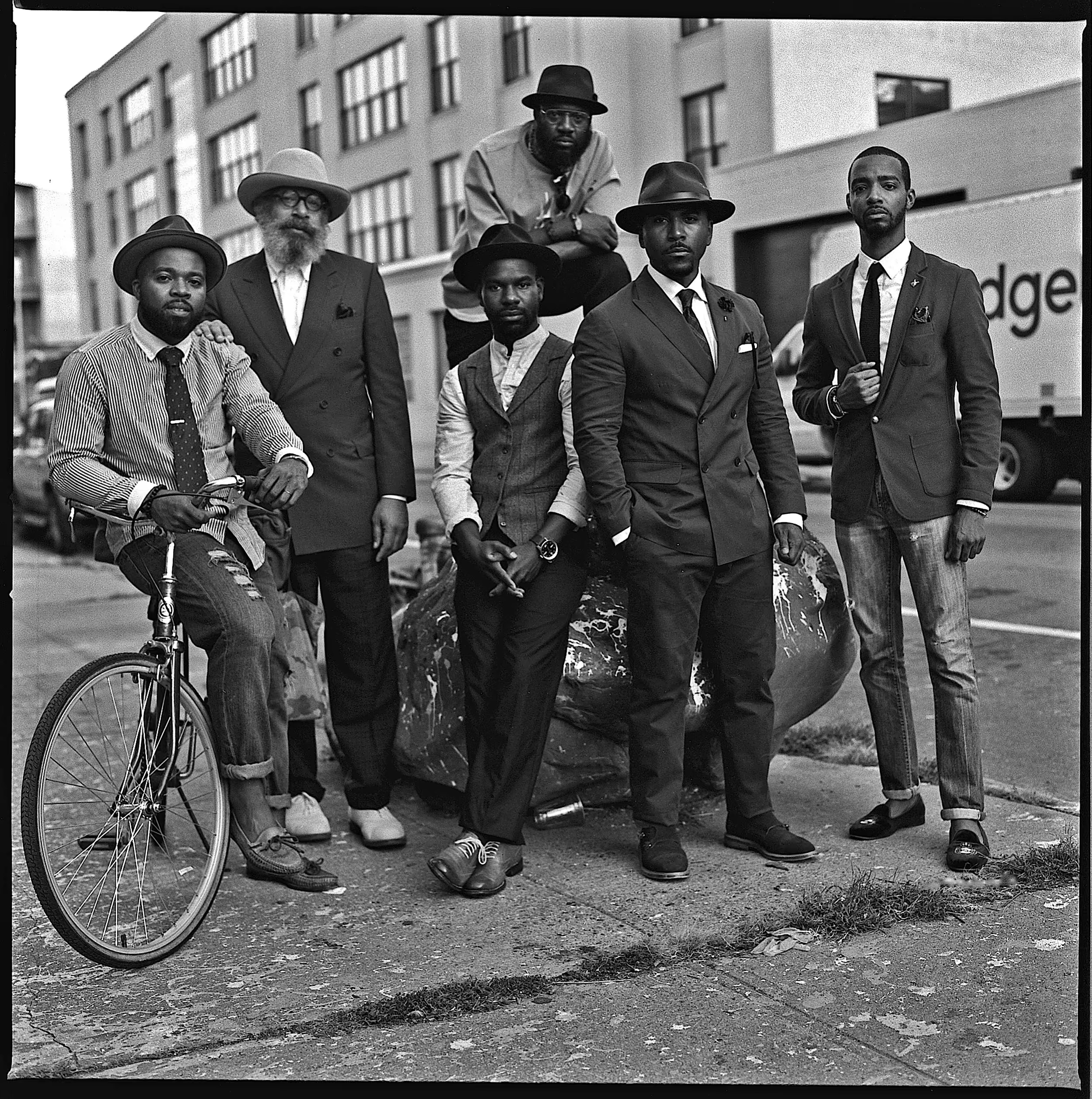
Russell Frederick, Surround Yourself with Kings. 2014, Bedford Stuyvesant, Brooklyn, 2014
Reflection By
Alicia Garza, Author and Organizer
Russell Frederick's Surround Yourself with Kings depicts six men, varying in age, looking dapper while staring directly into the camera. There is relationship between these men; perhaps one is the other's child's godfather. Perhaps another two are cousins who grew up together and moved to the city from a rural community somewhere down South. These men are fathers, brothers, neighbors, friends, kings. They are the manhood that Emmett Till was denied—the right to live to be an adult, surrounded by fathers, brothers, neighbors, friends, kings. I imagine Emmett at the center of this photo—smiling, wearing his best, settling down in the Big City with extended family and friends who helped him flee racial terror and violence and learn how to survive a different environment with related perils, having each other's backs the entire way.
Community Reflections
Share your reflection
Emmett Till would be in his eighties now. Somewhere in the space between the boy he was and the man he never became lives a question worth sitting with: What if he had lived? Add your reflection to a growing archive of others imagining:
- What if Emmett Till lived?
- What would his life have required of us all?
- What are your hopes for Emmett Till’s unlived life?
- How does Emmett Till still live today?
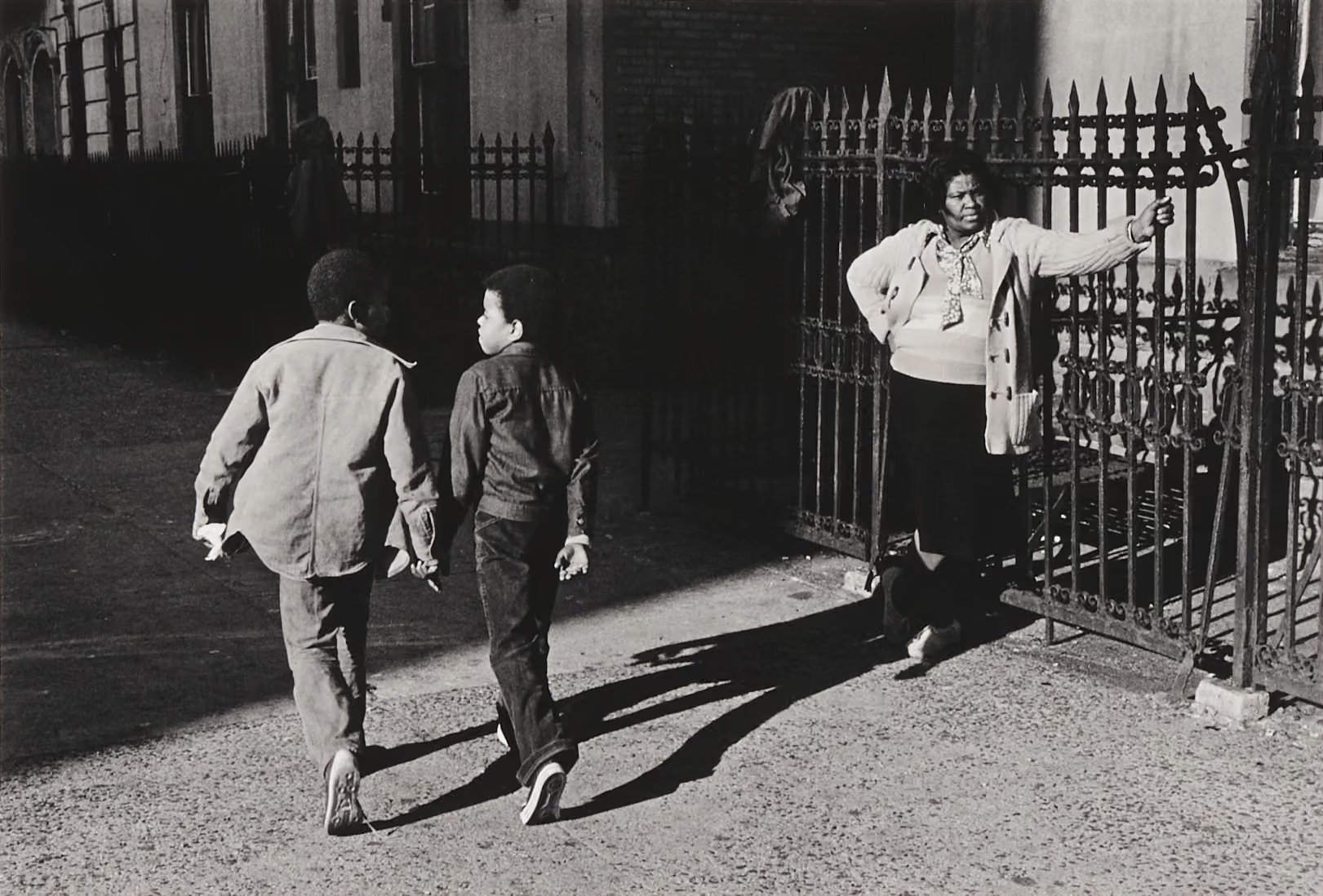
Dawoud Bey, A Woman And Two Boys Passing, from the Harlem, USA portfolio, 1978
Reflection By
RaMell Ross, Filmmaker
. . . with the alternate meandering then of photographic history, If Emmett Till Lived, the unprecedented power of his image in that casket not playing its role as a cultural inflection point, perhaps Dawoud's image A Woman And Two Boys Passing ripples otherwise, becoming a dynamic site in the indexical truth/constructed image discourse—the (non)fiction of Blackness, the light/dark symbolic order of the image, and the speculative social scripts of behavior at play in its moment and reading, elevating the image to allegory.
Community Reflections
Share your reflection
Emmett Till would be in his eighties now. Somewhere in the space between the boy he was and the man he never became lives a question worth sitting with: What if he had lived? Add your reflection to a growing archive of others imagining:
- What if Emmett Till lived?
- What would his life have required of us all?
- What are your hopes for Emmett Till’s unlived life?
- How does Emmett Till still live today?
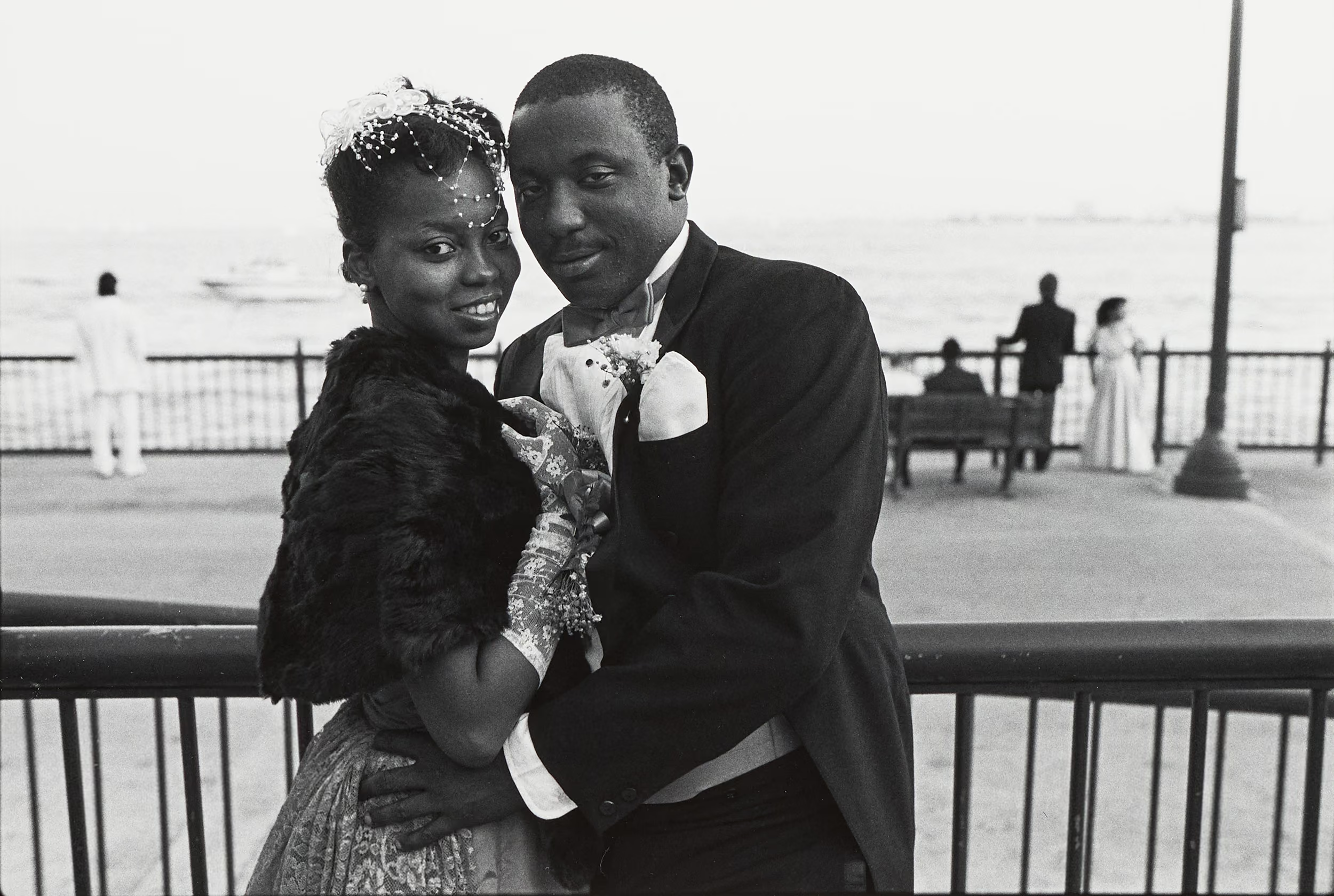
Tom Arndt, Prom Couple, Navy Pier, from Changing Chicago, 1987
Reflection By
Rep. Ayanna Pressley, U.S. Representative, Massachusetts's 7th Congressional District
To imagine If Emmett Till Lived is to honor not only the life that was stolen from him, but the life he deserved to live. I imagine him here as a husband—loved, cherished, and afforded the dignity of growing old beside someone who saw his full humanity. I imagine the possibility of fatherhood, of laughter at the dinner table, of anniversaries, and of ordinary joy that should never have been denied to any child. This photograph becomes more than a portrait of marriage; it becomes a meditation on stolen futures and the enduring power of Black love, Black tenderness, and Black possibility. To remember Emmett Till is not only to mourn what this nation took from him, but to affirm the fullness of the man he could have become.
Community Reflections
Share your reflection
Emmett Till would be in his eighties now. Somewhere in the space between the boy he was and the man he never became lives a question worth sitting with: What if he had lived? Add your reflection to a growing archive of others imagining:
- What if Emmett Till lived?
- What would his life have required of us all?
- What are your hopes for Emmett Till’s unlived life?
- How does Emmett Till still live today?
Antonio Perez, Children Playing Behind an American Flag Hanging in Little Village, 2002
Reflection By
Chelsea Clinton, Vice Chair, Clinton Foundation and Clinton Health Access Initiative
Children reaching upward in anticipation or jumping out of excitement feels universal. And yet, we know from history and myths alike that the presumed universality is a mirage. The most horrific moments in the story of a nation—any nation, every nation, this nation—are often how we fail our children or, if we believe there is such a distinction to be made, how we fail someone else's children. The refusal to deny that truth or to be suffocated by it is captured in this photograph. We are an imperfect union, and the pursuit of a better one is codified in our beginning, even if we have not always agreed on who is included, who is protected, which lives matter. In this image, all the children in it matter, their enthusiasm palpable even in their shadows as our flag shelters them. Their joy lit by the sun and their own inherent spirits, their arms stretched upward without apparent worry and full of possibility. This is what every child deserves. This is what Emmett Till deserved.
Community Reflections
Share your reflection
Emmett Till would be in his eighties now. Somewhere in the space between the boy he was and the man he never became lives a question worth sitting with: What if he had lived? Add your reflection to a growing archive of others imagining:
- What if Emmett Till lived?
- What would his life have required of us all?
- What are your hopes for Emmett Till’s unlived life?
- How does Emmett Till still live today?
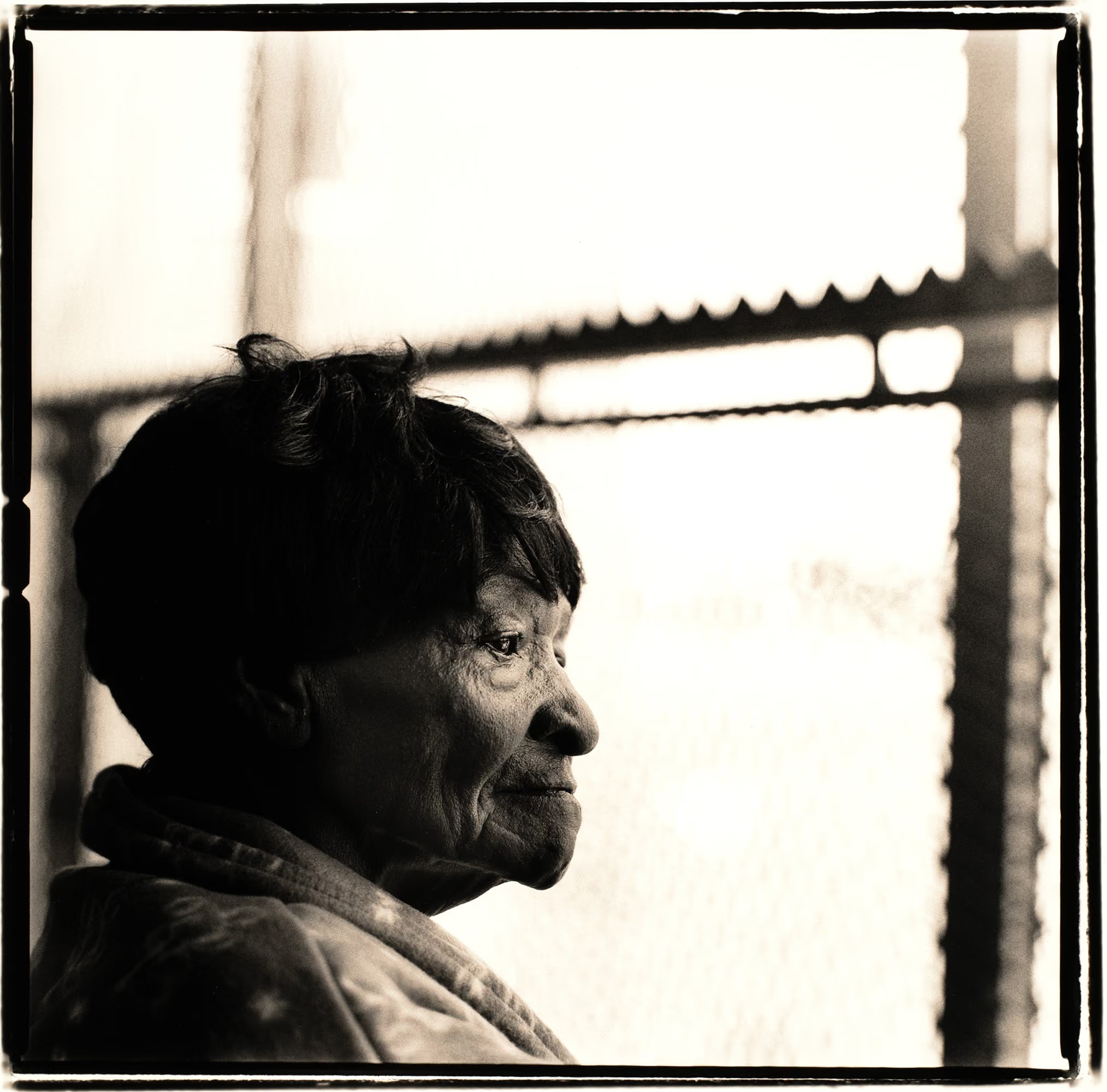
Jack Bridges, Mrs. White, from The Robert Taylor Project, 2004
Reflection By
Rhea L. Combs, Senior Curatorial Fellow in Global and Contemporary Art, Baltimore Museum of Art
Framed in profile against a softly illuminated window, Jack Bridges's Mrs. White, from The Robert Taylor Project (2004), is a quiet, intimate study of memory, presence, and strength. The sepia-toned photograph of a resident elder is both contemplative and resolute. Her face, shaped by soft light and shadow, suggests a life lived between the red clay of the Delta and concrete of the Windy City. The photograph's tenderness resides in its restraint—showcasing the private moment of an individual life buoyed by the endurance and resolve of her community.
Peering carefully at the image of Mrs. White while also reflecting on Emmett Till, one is overcome with a feeling of yearning. What if Emmett had been able to return to Chicago in 1955? At the time this image was taken, Till would have been a mature adult in his sixties. Perhaps their paths would have crossed—attended the same church? Or perhaps she and his mother, Mamie, would have been friends? Gazing upon Mrs. White as she looks out the window, one also wonders: How many children has she witnessed over the years laughing, playing, growing up, and moving on—experiencing life. A gift she also has been able to experience and witness, and one Till deserved but had cut short.
Community Reflections
Share your reflection
Emmett Till would be in his eighties now. Somewhere in the space between the boy he was and the man he never became lives a question worth sitting with: What if he had lived? Add your reflection to a growing archive of others imagining:
- What if Emmett Till lived?
- What would his life have required of us all?
- What are your hopes for Emmett Till’s unlived life?
- How does Emmett Till still live today?
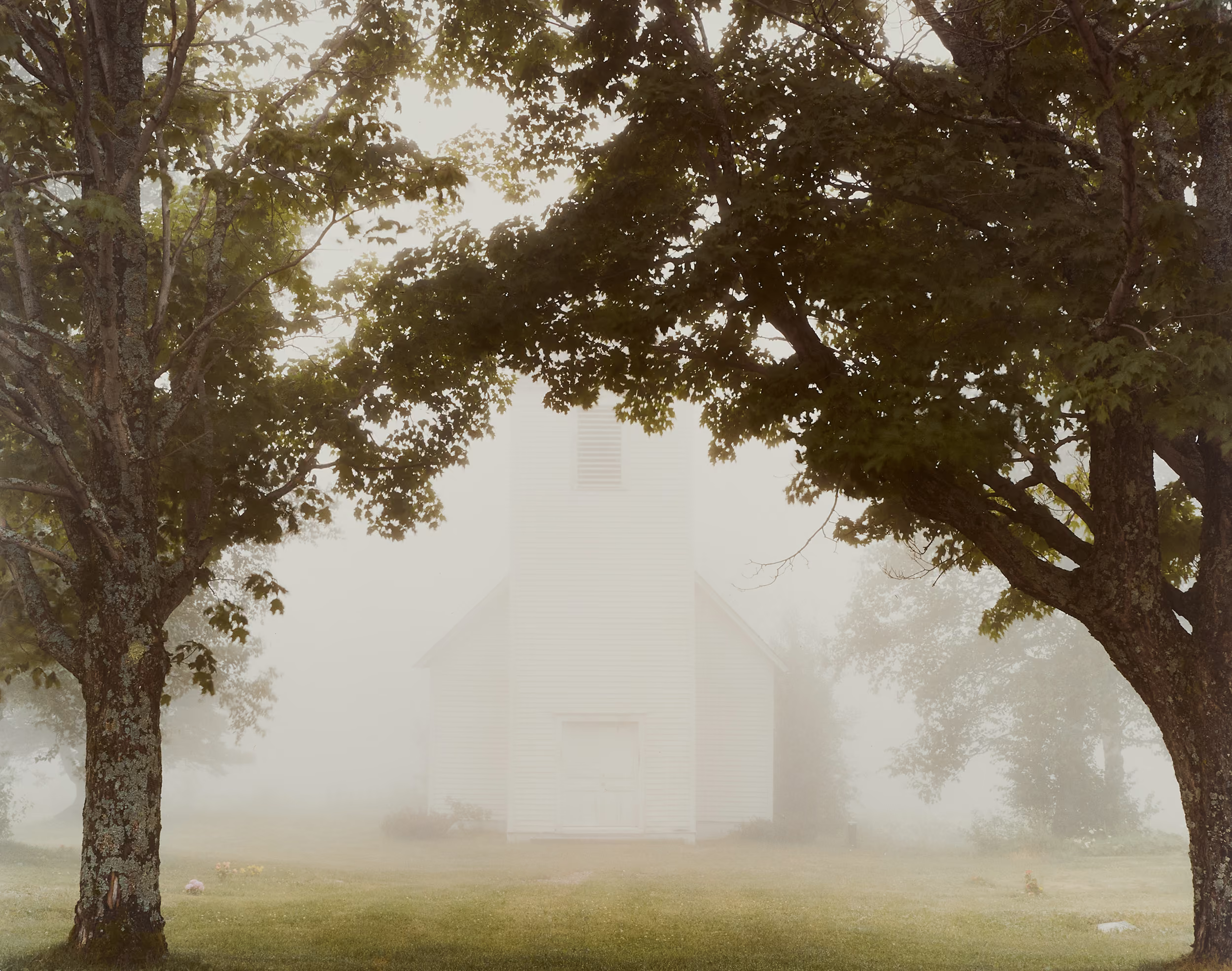
Gretchen Garner, Untitled, 1981
Reflection By
Brent Leggs, President and CEO, National Trust for Historic Preservation
Gretchen Garner was a celebrated feminist photographer, curator, and scholar. Her career largely centered on Chicago, and in the 1980s she expanded to shooting images of the rural landscape surrounding the city. This photo, Untitled, from 1981, exemplifies the beauty and power of nature, which dominates the foreground of the image. However, upon further viewing, a clarity of intention reveals itself as the historic church building seems to materialize into view. At that point, the photograph takes on an additional dimension, speaking to the transcendent connection between architecture, humanity, and faith. All are interconnected here as Garner's composition and depth of field draw the viewer deeper into the message.
Community Reflections
Share your reflection
Emmett Till would be in his eighties now. Somewhere in the space between the boy he was and the man he never became lives a question worth sitting with: What if he had lived? Add your reflection to a growing archive of others imagining:
- What if Emmett Till lived?
- What would his life have required of us all?
- What are your hopes for Emmett Till’s unlived life?
- How does Emmett Till still live today?
Leonard Freed, Harlem, New York, USA, 1963
Reflection By
Paul M. Farber, Director and Co-Founder of Monument Lab
The times I have spent with the Emmett Till Interpretive Center in the Mississippi Delta have been life-changing for me. It has brought me back to my time following in the historic footsteps of photographer Leonard Freed, a Jewish White photographer who documented Jews returning to Europe after the Holocaust and later, the Civil Rights Movement. Of his classic book Black in White America (1969), he said his country was sick with racism, and he "wanted to get involved, to talk, and . . . become healthy again." From Cold War Berlin to Jim Crow South to his home borough of Brooklyn, Freed sought to mark lines of segregation and then overcome them through engaged photography. Through Freed's camera, we are reminded of our connected differences and shared humanity.
Community Reflections
Share your reflection
Emmett Till would be in his eighties now. Somewhere in the space between the boy he was and the man he never became lives a question worth sitting with: What if he had lived? Add your reflection to a growing archive of others imagining:
- What if Emmett Till lived?
- What would his life have required of us all?
- What are your hopes for Emmett Till’s unlived life?
- How does Emmett Till still live today?
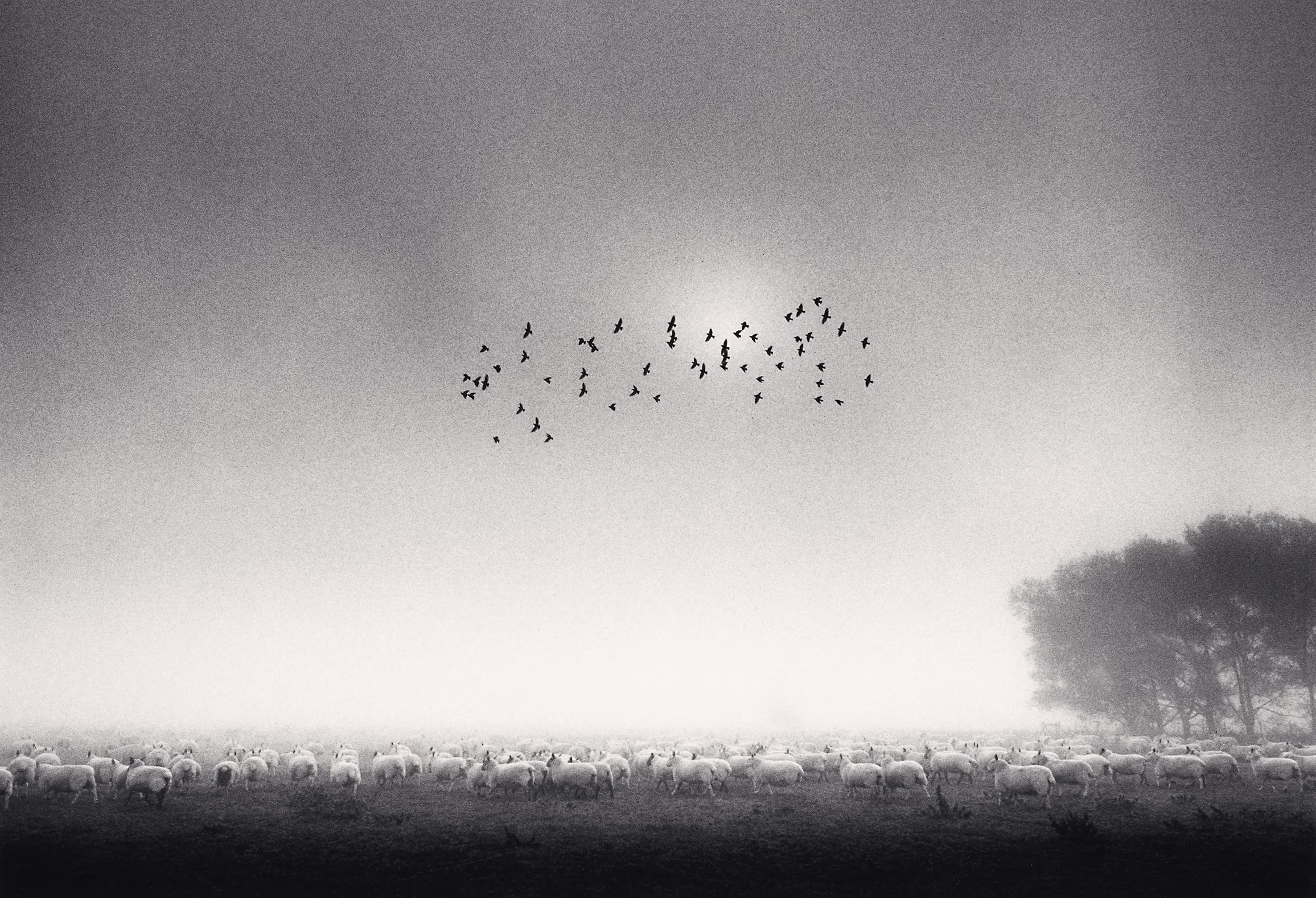
Michael Kenna, Fifty-Five Birds, Wolverton, Buckinghamshire, England, 1991
Reflection By
Dr. Marvel Parker, Founding Director of the Emmett Till and Mamie Till-Mobley Institute
If birds fly over the rainbow, why can't I?
Community Reflections
Share your reflection
Emmett Till would be in his eighties now. Somewhere in the space between the boy he was and the man he never became lives a question worth sitting with: What if he had lived? Add your reflection to a growing archive of others imagining:
- What if Emmett Till lived?
- What would his life have required of us all?
- What are your hopes for Emmett Till’s unlived life?
- How does Emmett Till still live today?
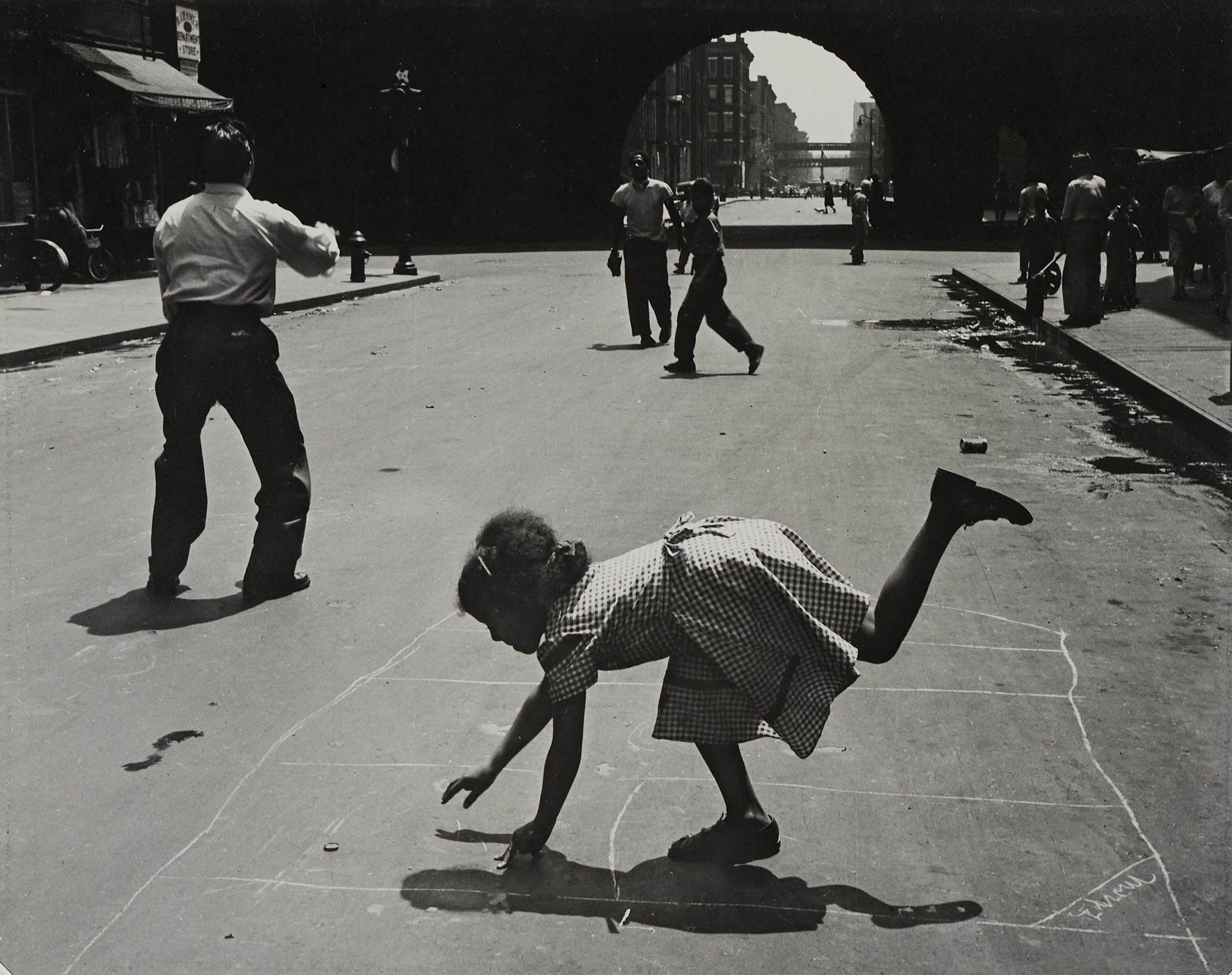
Walter Rosenblum, Hopscotch, 1952
Reflection By
Rev. Wheeler Parker Jr., Pastor and Author
A time of innocence.
Community Reflections
Share your reflection
Emmett Till would be in his eighties now. Somewhere in the space between the boy he was and the man he never became lives a question worth sitting with: What if he had lived? Add your reflection to a growing archive of others imagining:
- What if Emmett Till lived?
- What would his life have required of us all?
- What are your hopes for Emmett Till’s unlived life?
- How does Emmett Till still live today?
Hank Willis Thomas, …and don’t let them catch you!, 2024 [left image without flash; right image with flash]
Reflection By
Yara Shahidi, Actor and Producer
“...and don’t let them catch you!" Both a wish and a warning in the wake of Emmett Till. Till deserves to play alongside these boys. We can envision him amidst these silhouettes. Till brings to the surface the ephemeral nature of black childhood. It is a phenomenon less to do with age and more with how old we are allowed to be. There is a tension in the collaged images of the Civil Rights Movement coming together to form black boys playing – they shape the movement and are shaped by the movement. It is similar to the tension within Till’s legacy. How do we revere him as the catalyst for unprecedented collective action while pushing against the rhetoric of ‘sacrifice,’ of thinking of the end of his childhood as necessary? Black children are not the offerings at the altar of justice.
Community Reflections
Share your reflection
Emmett Till would be in his eighties now. Somewhere in the space between the boy he was and the man he never became lives a question worth sitting with: What if he had lived? Add your reflection to a growing archive of others imagining:
- What if Emmett Till lived?
- What would his life have required of us all?
- What are your hopes for Emmett Till’s unlived life?
- How does Emmett Till still live today?